Separate the temperature target from the time schedule
Use two questions—when and what target—to read controls without confusing a schedule with a guaranteed room temperature.
Updated:
Ask two different questions
Energy Saving Trust distinguishes a programmer's timing function from a room thermostat's temperature function in its guidance for boiler heating controls. Its article explicitly has that central-heating scope. The distinction is useful vocabulary, but it does not establish how every portable heater behaves or permit adding a control to one.
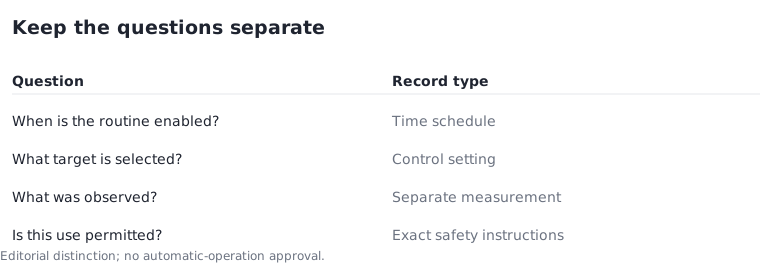
Write the timing question and temperature question separately. A start time answers when a documented routine begins; a temperature setting describes a target or control condition. Neither entry by itself establishes the actual temperature at a particular place in the room. Keeping those questions apart makes a manual easier to read and a support enquiry easier to answer.
Energy Saving Trust: heating controls ?
Use a simple example without prescribing a routine
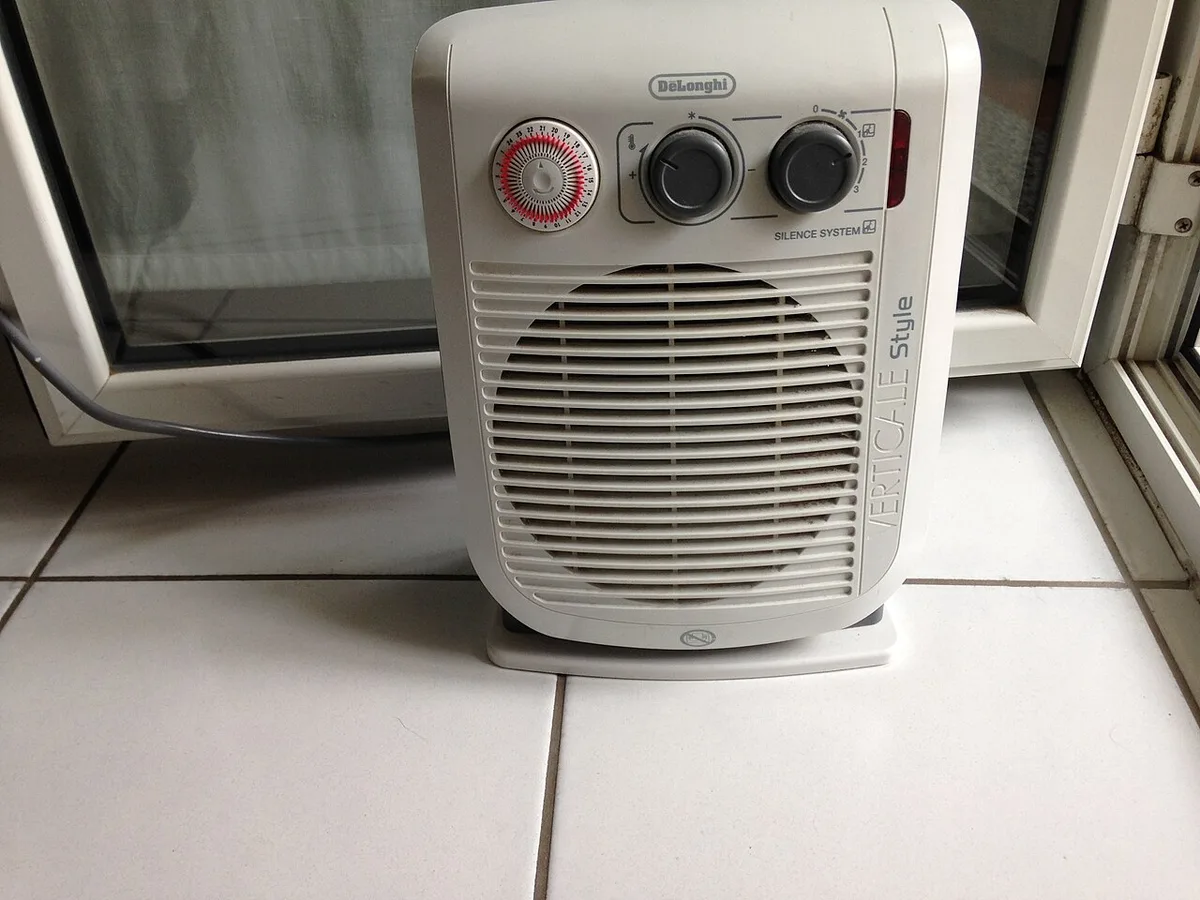
Imagine a purely illustrative record with a start time of 17:00, an end time of 18:00 and a target of 20°C. The time interval is 1 hour. It does not prove that the room reaches 20°C, that the appliance draws its maximum power throughout the interval or that this is an appropriate schedule for your household.
If the target changes to 21°C while the interval remains 1 hour, one part of the record has changed and another has not. That is all the example establishes. Avoid attaching a precise energy saving or comfort promise without evidence about the actual system and conditions. These numbers demonstrate the structure of a record, not recommended settings.
Read combined controls as combined functions
The Dimplex ML manual describes an integrated time-and-temperature schedule in AUTO mode. That is a documented example of both functions appearing in one control system. It does not mean that every dial marked with time also selects temperature, or that a thermostat alone creates a time schedule.
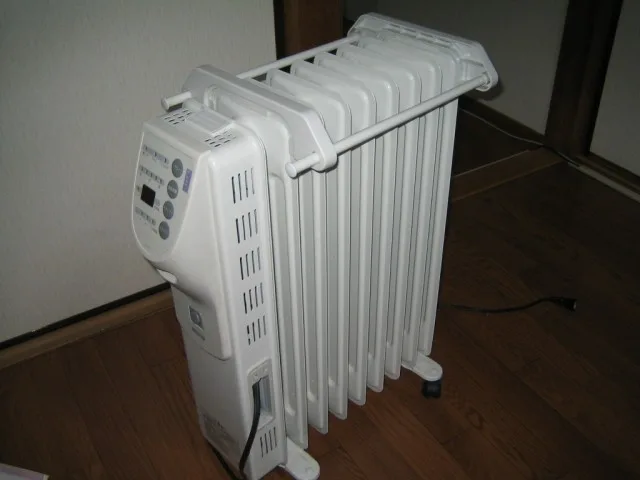
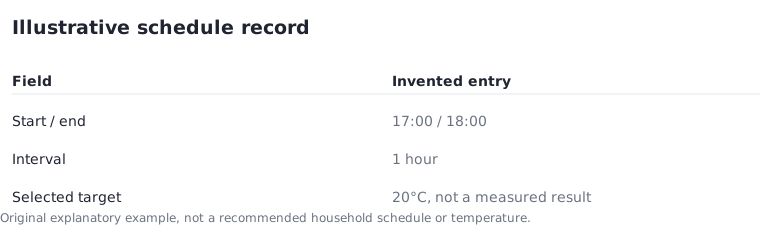
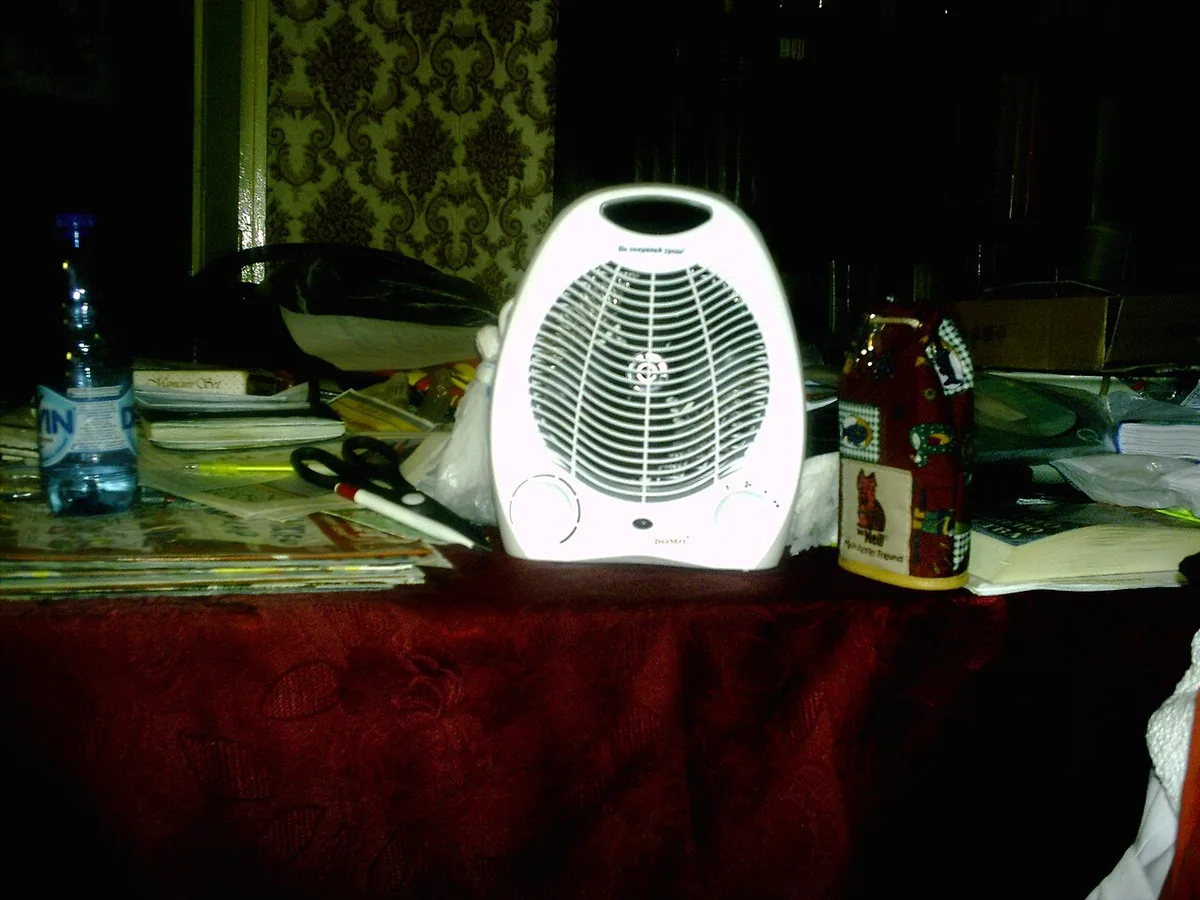
The historical upright heater photograph shows a mechanical timer dial beside separate rotary controls. Another fan-heater image shows a different arrangement, and the radiator has controls on its front panel. Use those visible differences to locate questions in the correct manual. Do not identify the full operating logic solely from the shape or number of knobs.
Dimplex ML convector UK instructions, issue 2 ?
Keep the appliance restrictions in view
A portable heater's integrated schedule is not blanket permission to operate it unattended or while asleep; Electrical Safety First advises against those uses. Similarly, a central-heating programmer guide should not be treated as instructions for a separate portable appliance. Preserve the boundary between the general vocabulary and the actual permitted use.
Before relying on a routine, check the exact mode, any documented override and the manufacturer's shutdown instructions. If the behaviour is unclear, ask support rather than experimenting with external switching. Our purpose here is to distinguish functions, not to bypass restrictions or make changes to electrical wiring or protective devices.
Electrical Safety First: portable heaters ?
Make a record another person can understand
Keep the model, document version, mode, timing fields and temperature field together. Add a separate note for observed readings if you choose to record them, so the selected target is not mistaken for a measurement. Write down an unanswered question in plain language rather than substituting a guess for missing documentation.
A useful record can say that the timing function is understood while the effect of an override still needs clarification. That is a better basis for a purchase or support conversation than a confident label such as smart control. We have not tested the photographed appliances or predicted their heating performance; the guide explains how to read and separate the information.