Choose the room question before the appliance
Separate air movement, active cooling and additional heat before comparing a fan, portable air conditioner or electric heater.
Updated:

Start with the change you actually need
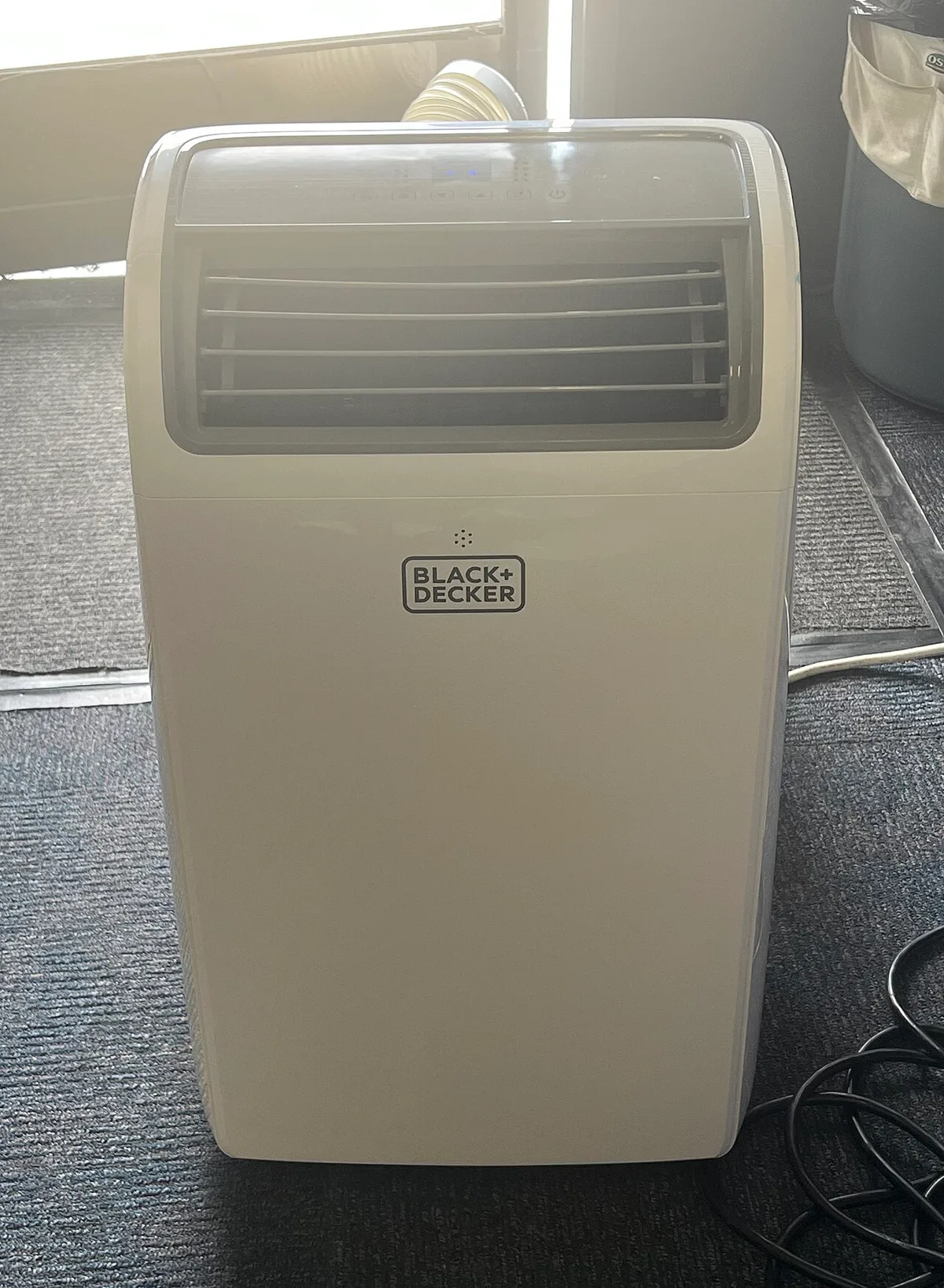
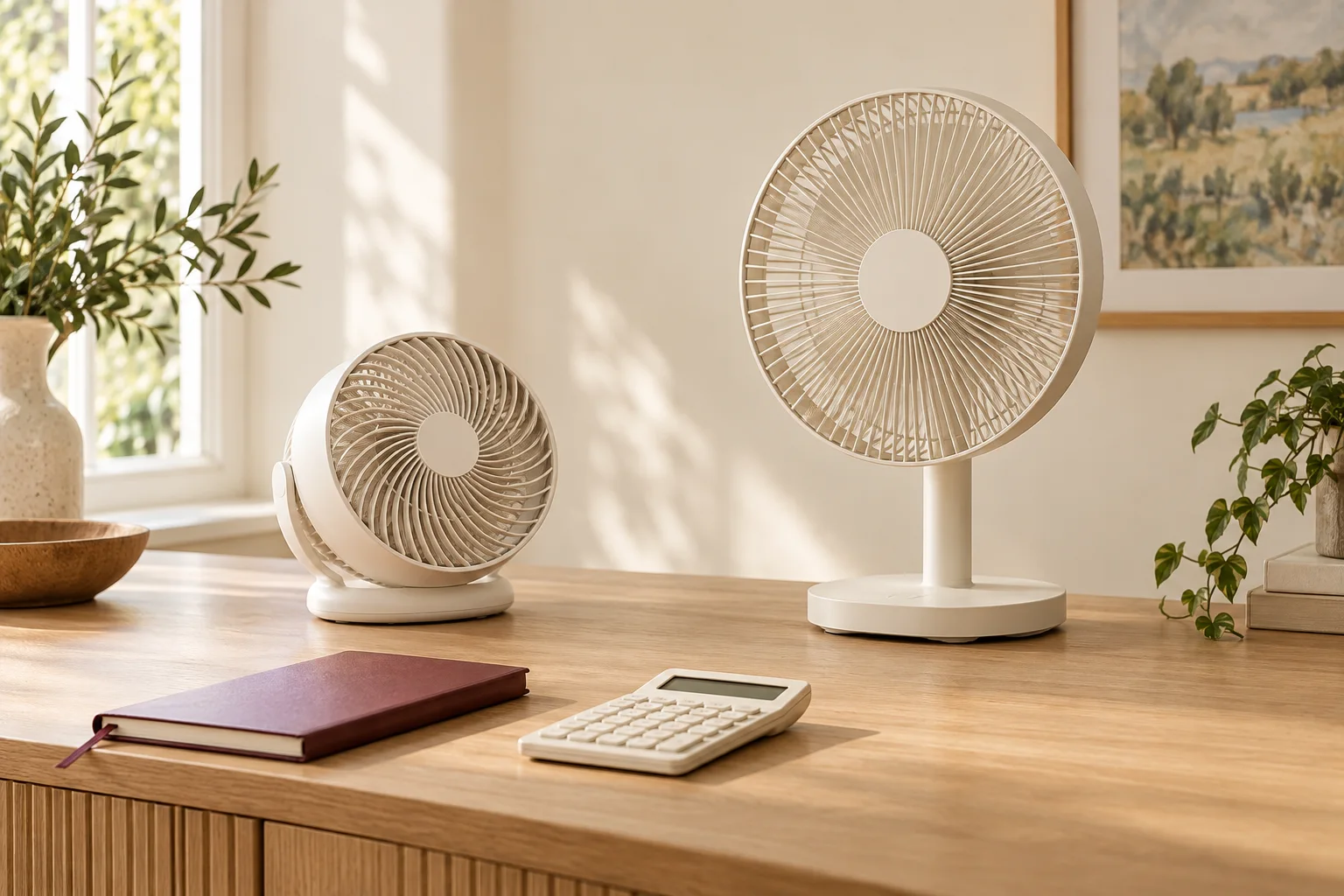
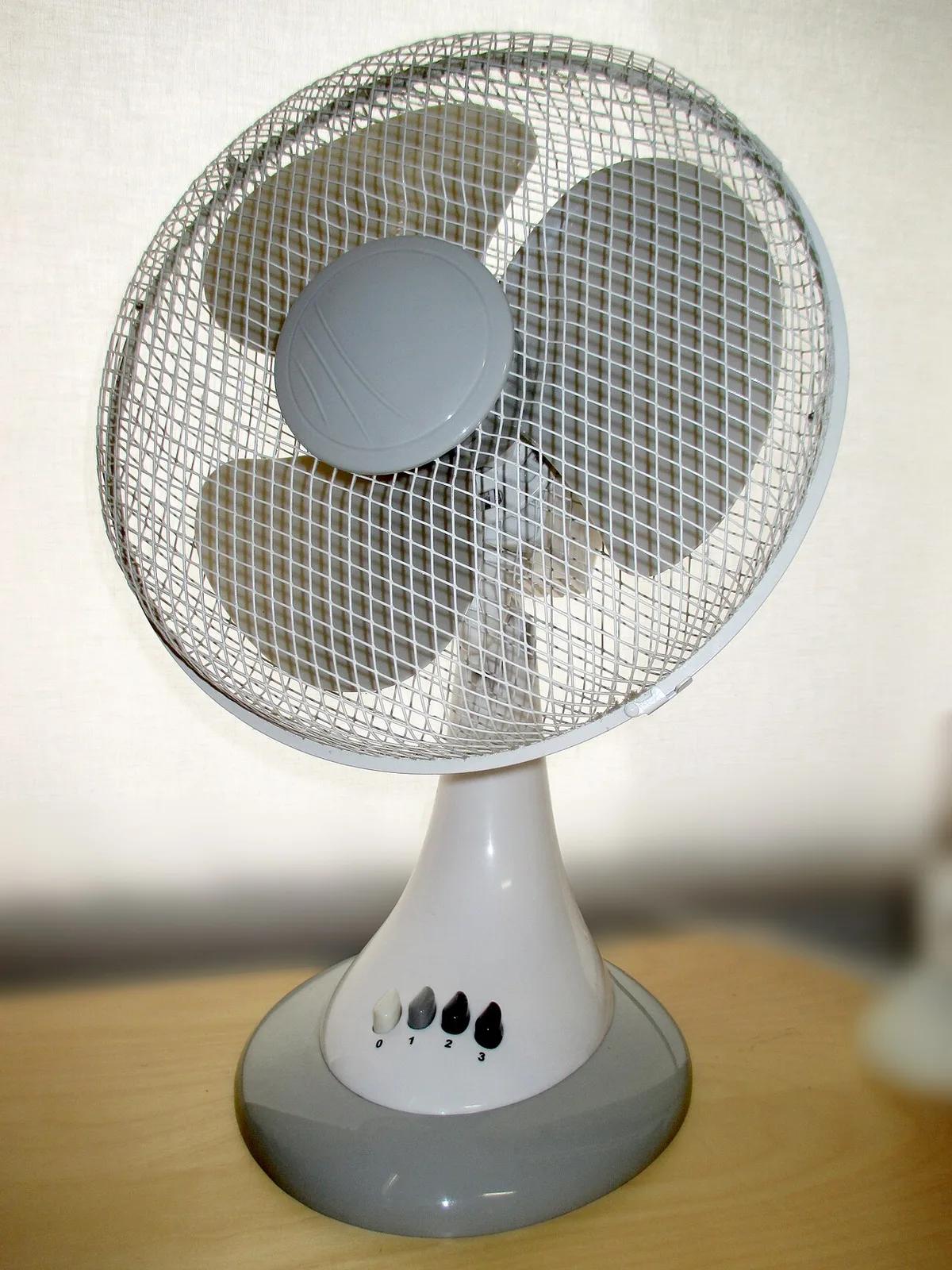
A fan, a portable air conditioner and an electric heater are not three versions of the same purchase. Energy Saving Trust explains that a fan moves air rather than lowering the room air temperature. Portable air conditioning actively cools air, while an electric heater belongs to a different question: adding heat. Start with that distinction before comparing prices or attractive product photographs.
Write one sentence about the room and the problem. For example, you may want air movement at a desk, active cooling in a particular room, or additional warmth during an occupied period. This is a purchasing brief, not a health assessment. A persistent building problem or a concern about someone's wellbeing may require a different kind of help from an appliance comparison.
Energy Saving Trust: keeping your home cool ?
Check whether the room can accommodate the whole setup
Measure the appliance position, access route and any installation components described in the exact manual. A portable air conditioner may involve an exhaust route and a window arrangement; the body dimensions alone do not describe the whole setup. Energy Saving Trust specifically draws attention to gaps around the exhaust-window connection. Follow the product instructions rather than improvising from a photograph.
Use a simple sketch with separate labels for the appliance, the window or other relevant room feature, and the space needed for access. Record measurements in centimetres consistently. A hypothetical 40 cm wide body is not a promise that a 40 cm gap is suitable: clearance, movement and service access remain separate questions. Ask about an unresolved constraint before ordering.
Energy Saving Trust: keeping your home cool ?
Treat heater placement as its own decision
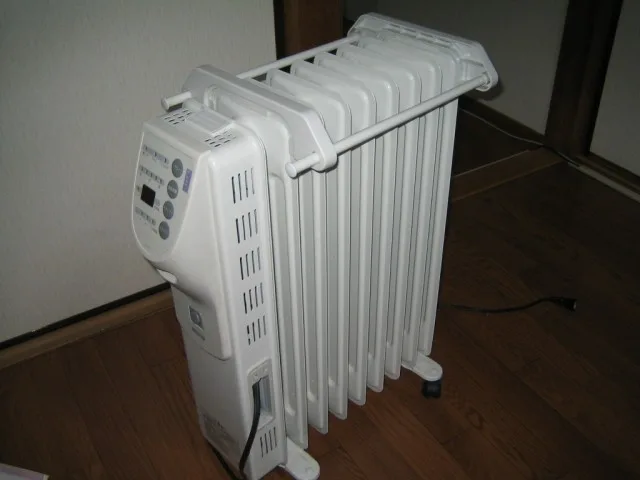
If the question is additional warmth, read the safety guidance before choosing a convenient-looking corner. Electrical Safety First advises keeping combustible materials at least one metre away from a portable heater, avoiding extension leads and not leaving a heater operating unattended or while asleep. The exact appliance instructions may impose further requirements.
The historical radiator photograph identifies a different appliance shape and control arrangement; it is not an approved installation example. Do not infer permitted clearances, plug suitability or accessory use from it. A low purchase price does not resolve an unsuitable position. If your proposed arrangement cannot follow the relevant instructions, change the plan rather than treating a checklist tick as permission to continue.
Electrical Safety First: portable heaters ?
Compare electricity only after matching the purpose
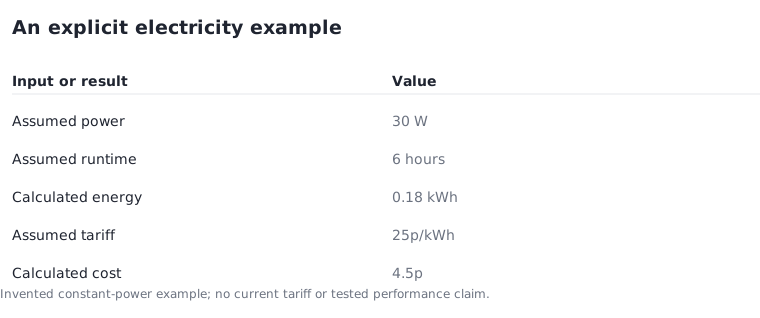
For an explicitly invented arithmetic example, a constant 30 W input for 6 hours uses 0.18 kWh. At an assumed tariff of 25p per kWh, that is 4.5p for the stated period. This is a calculation, not a current tariff, a tested fan result or evidence that one appliance produces the same comfort as another.
Keep electrical input separate from the function delivered. A smaller electricity number can reflect a different job, not a better solution to your particular problem. Record the setting and conditions behind an actual specification. The MeacoFan 1056 manual, for example, labels several power-related fields separately; do not copy an unexplained number into a comparison and discard its context.
MeacoFan 1056 manual MF1056EN3, November 2022 ?
Leave with a shortlist question you can answer
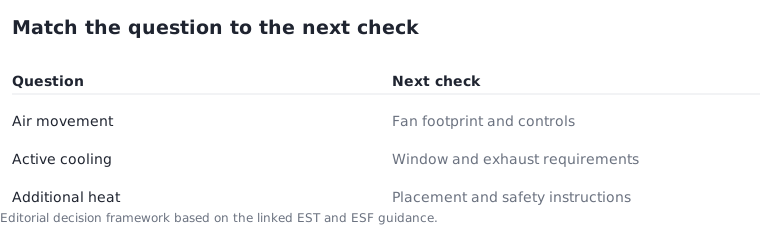
Your next step should follow the unresolved constraint. For a fan, compare footprint and usable controls. For portable cooling, confirm the window kit, exhaust arrangement and model-specific requirements. For a heater, confirm a suitable location and the official instructions before considering convenience features. Keep the exact model name with each source you save.
Use 3 columns in a shortlist: what the appliance is meant to do, what your room requires, and what still needs an answer. Exclude a candidate when a necessary condition cannot be met. This guide does not rank products or claim hands-on testing. It helps you ask a narrower question so that the next specification, quote or manufacturer response can actually change your decision.