Check drainage requirements for the selected mode
Distinguish the large exhaust duct from water drainage and identify the model-specific instructions before planning a location.
Updated:
Identify the mode before looking for a hose
For the Cirro models covered by the EN01 manual, Dry mode uses the central drainage port, while Heat on CH models uses the lower port. Cool mode does not require continuous drainage, although the manual describes circumstances requiring emptying. This is a model-specific distinction, not permission to move bungs or hoses on a different appliance.
Start your record with the full model identifier and the mode you intend to use. Then locate its drainage section and diagrams. The purpose of this article is to help you find the right instruction, not to replace the procedure. If a port cannot be identified confidently, stop and ask the manufacturer rather than trying a connection because it appears to fit.
Meaco Cirro 12000 and 12000CH manual EN01 ?
Keep the exhaust duct and water hose separate
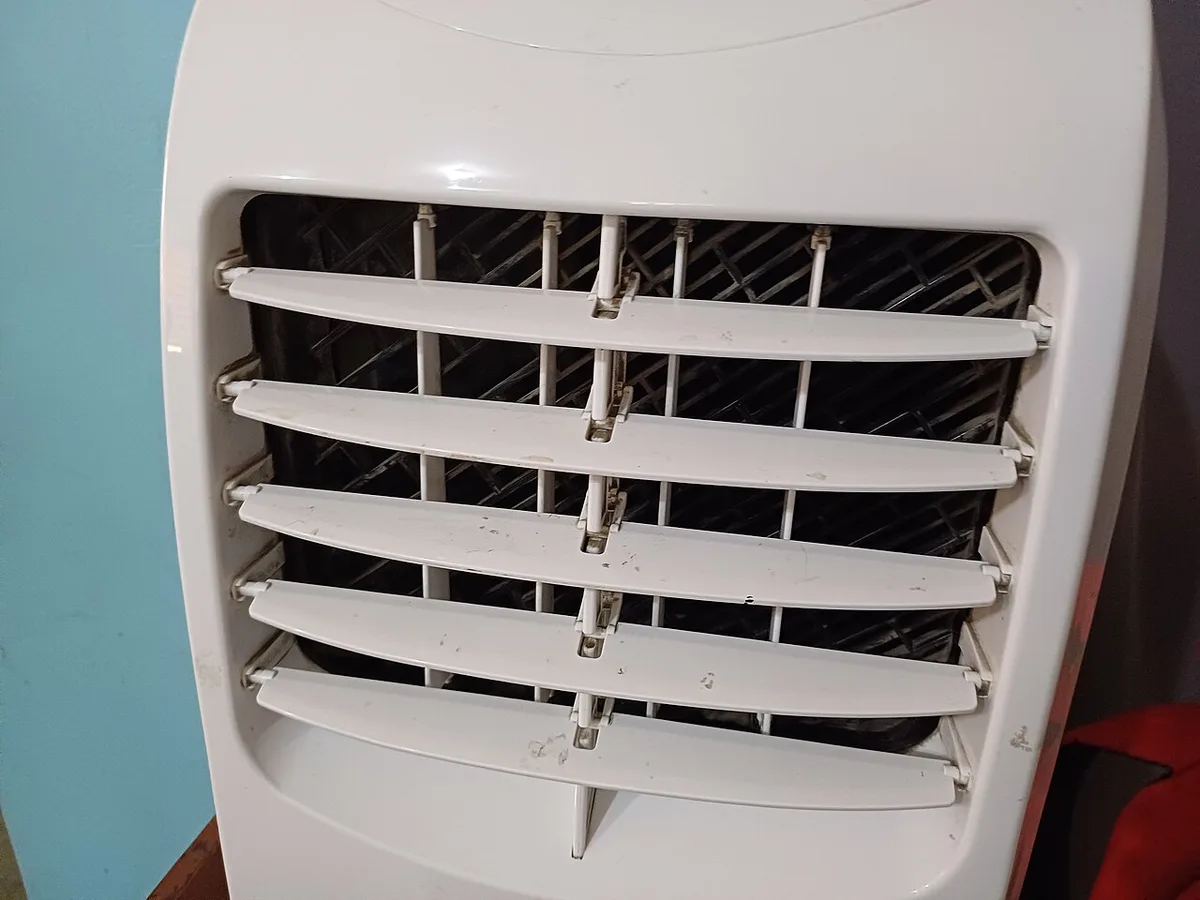
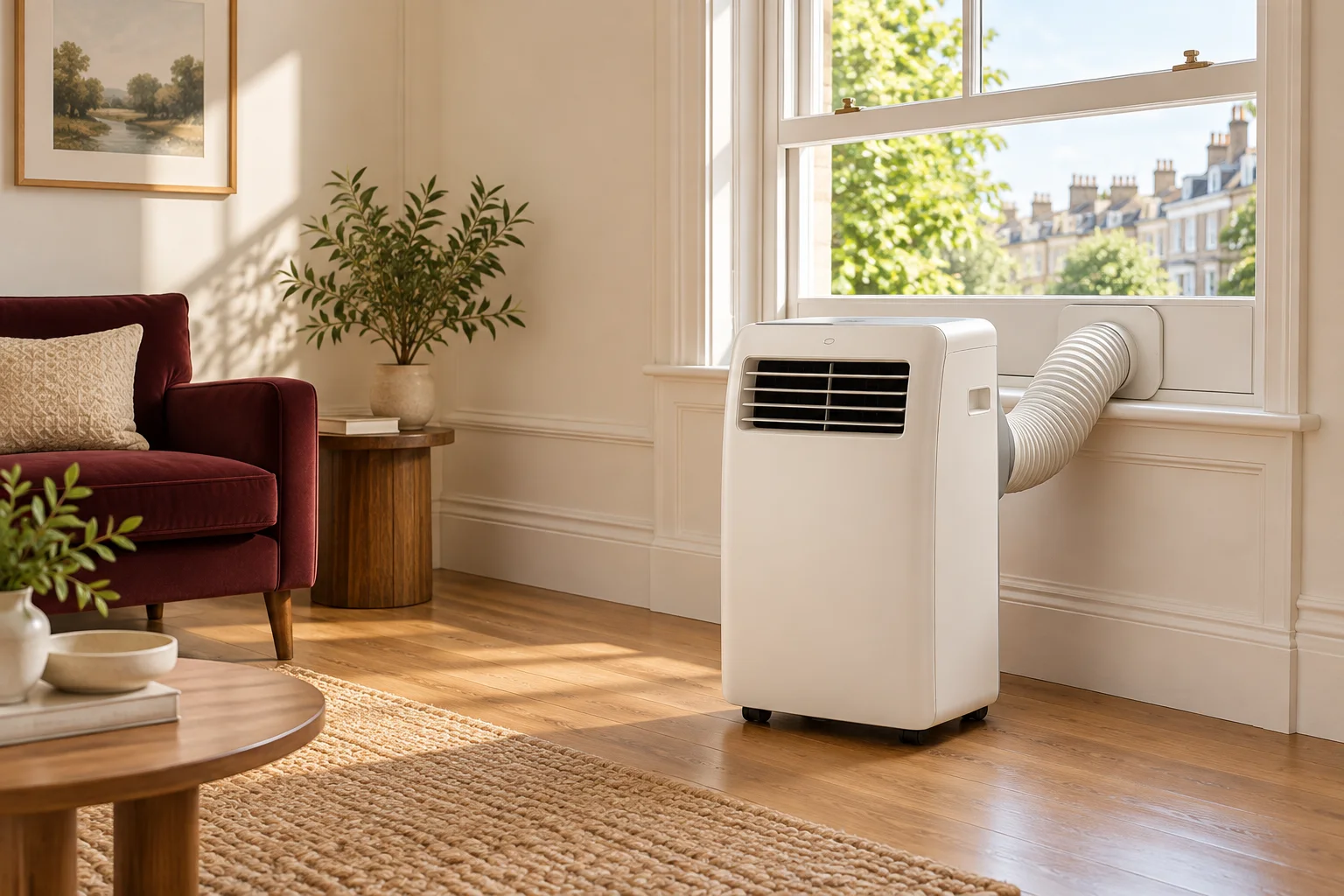
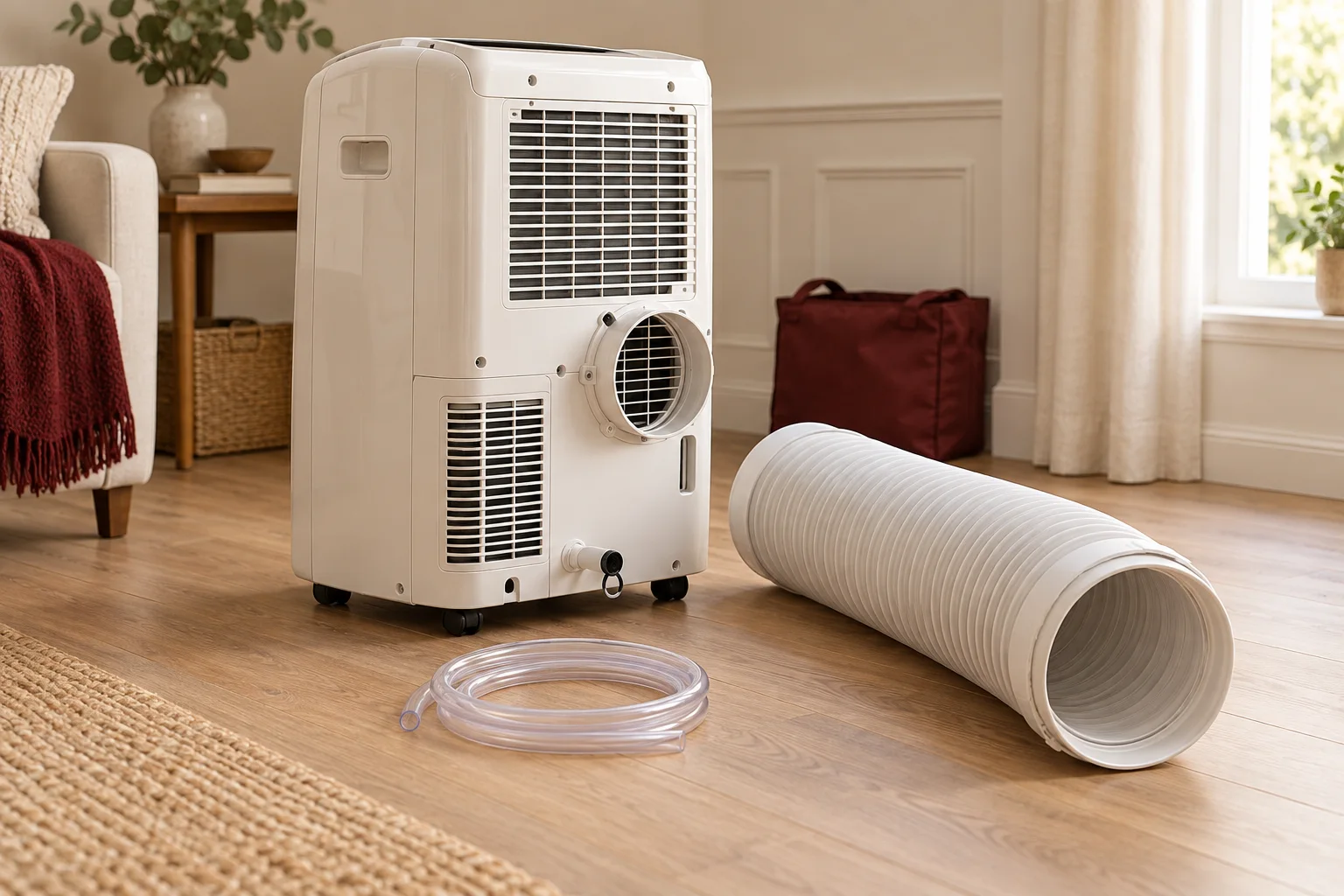
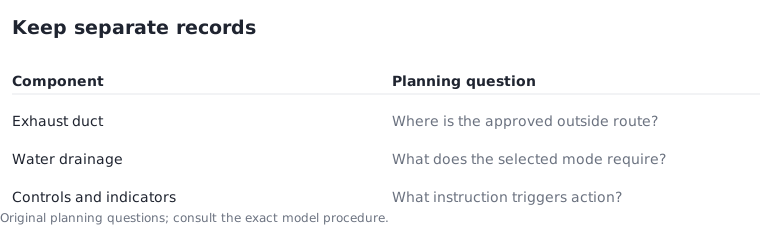
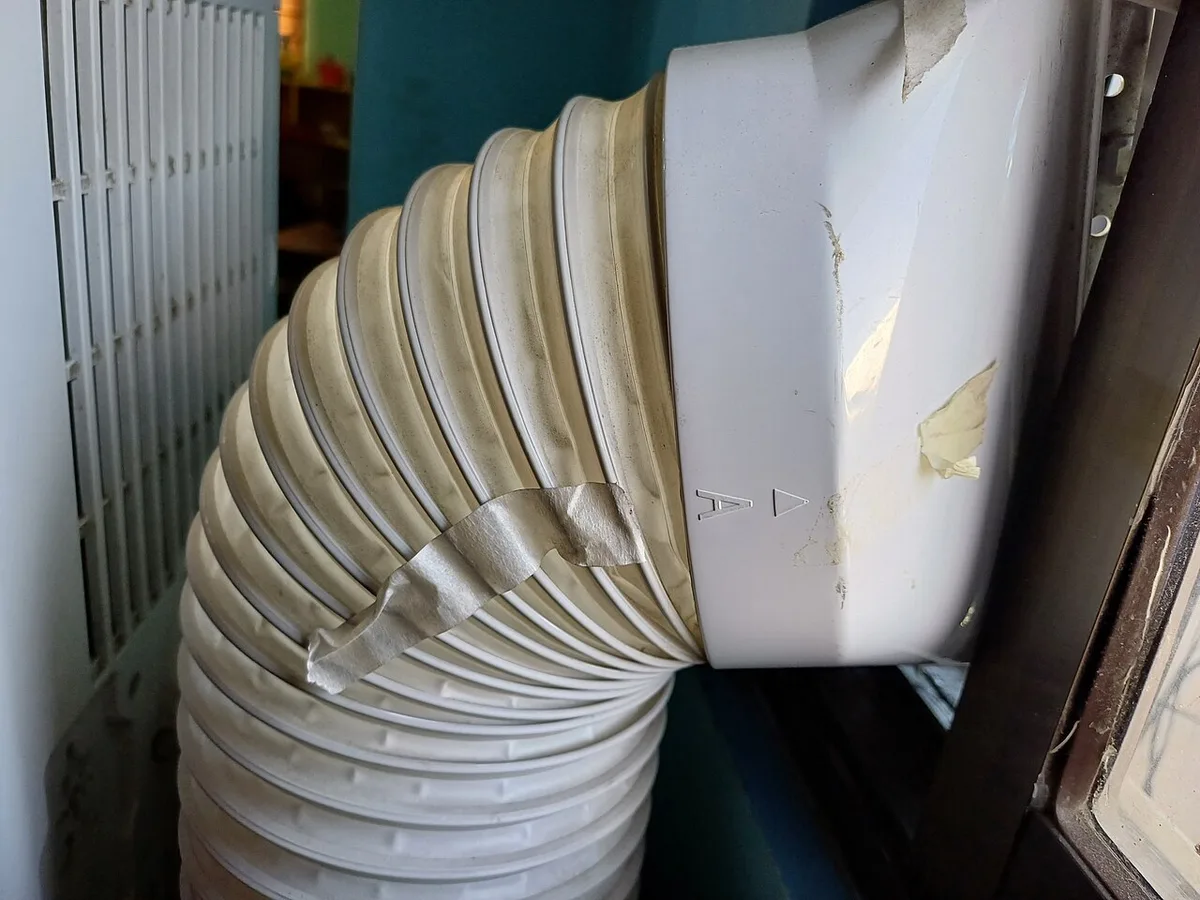
The large ribbed duct in the historical photograph is an exhaust component. It should not be mistaken for the smaller water-drainage arrangement described in a manual. A front-facing photograph can hide both the rear ports and the eventual drainage destination, which is why a visual shortlist needs a second evidence source. The Cirro specification lists a drainage hose 65cm long and 1.8cm in diameter. Those are model-document dimensions, not measurements taken from the historical exhaust photograph and not approval for a substitute hose.
Write two separate rows in your plan: one for the exhaust route and one for any required drainage route. Do not let a successful window-kit check close the drainage question automatically. The two records may affect the same proposed location, but an answer about one component does not establish that the other has a suitable arrangement.
Meaco Cirro 12000 and 12000CH manual EN01 ?
Plan access without inventing an emptying schedule
Consider whether you can reach the documented parts and read the display in the proposed position. A cabinet squeezed behind furniture may look tidy in a sketch while leaving the relevant area difficult to access. The appliance's clearances and operating instructions still apply; a convenient water destination is not the only condition to satisfy.
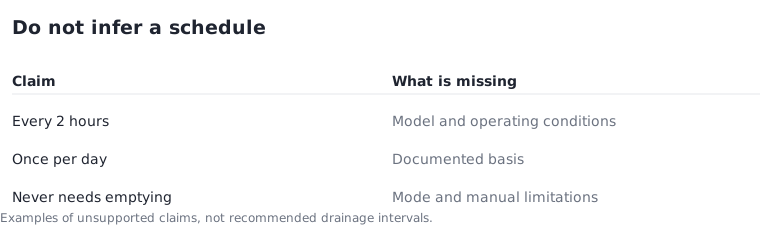
Do not assume that a unit will need emptying every 2 hours, once per day or never simply because someone else's room behaved that way. Those times are examples of unsupported schedules, not recommendations. Record the actual indicator or condition named in your model's instructions, and avoid publishing a universal interval from a single anecdote.
Treat an unresolved route as a purchase question
If the documented arrangement does not make sense for your room, ask for clarification before ordering. Explain the exact model, intended mode and proposed position. A photograph of the space may help the manufacturer understand the question, but it does not turn this editorial guide into an installation assessment.
Keep the supplied accessories list separate from any optional equipment you are considering. Do not assume that a connector, pump or substitute hose is suitable because a seller describes it as universal. Get model-specific confirmation where needed. This avoids buying a collection of parts before discovering that the underlying arrangement has never been approved.
Use the original procedure when operating the appliance
When it is time to use or empty the unit, return to the complete manufacturer procedure, including its shutdown, electrical and handling instructions. This article intentionally does not provide a shortened sequence for moving a heavy appliance or handling water near electrical equipment. A model mismatch should be resolved before proceeding.
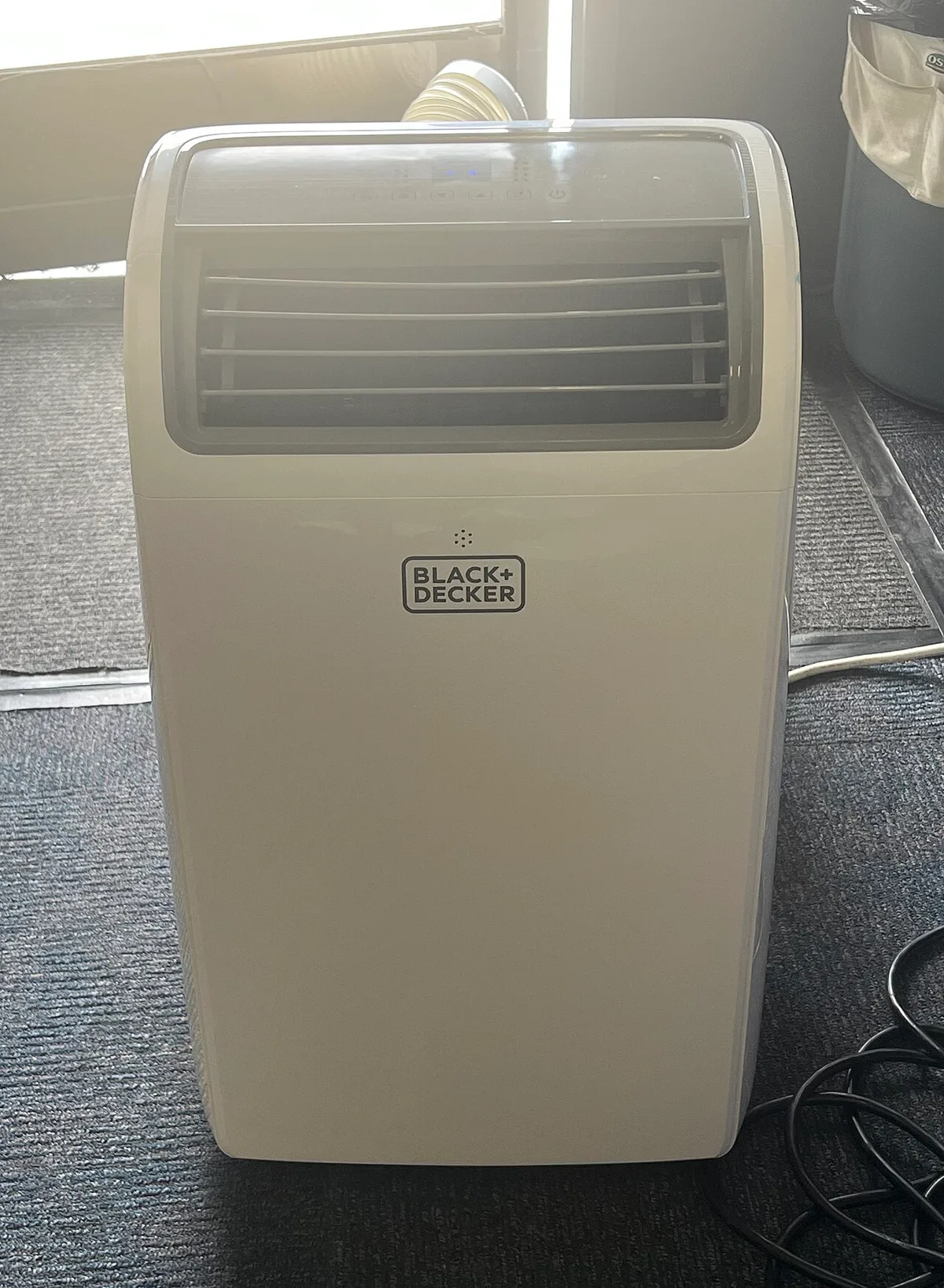
Keep the manual accessible with your mode and port notes, and update the record if the appliance changes. The three historical photographs illustrate the body, outlet and exhaust connection; they are not pictures of the specific Cirro drainage ports. We have not operated these units or measured their water collection, and no drainage-frequency claim is implied.