Keep cooling capacity separate from electrical input
Read the labels beside the numbers and use a transparent electricity scenario without promising actual cooling or bills.
Updated:

Keep the field name attached to the number
The Cirro manual lists a 3.5kW rated cooling capacity and a separate 1.1kW rated cooling power input. Elsewhere its specifications show 1350W power consumption. Those differently labelled entries should remain distinct; this guide does not reconcile their test conditions or treat one as a guaranteed continuous draw in your room.
Copy a product figure into your notes with its field name, unit, model and document. A bare number is easy to misread after the source tab is closed. If a comparison depends on why two fields differ, ask the manufacturer for that context rather than selecting whichever figure makes the product appear cheaper to operate.
Meaco Cirro 12000 and 12000CH manual EN01 ?

Use an explicitly invented electricity example
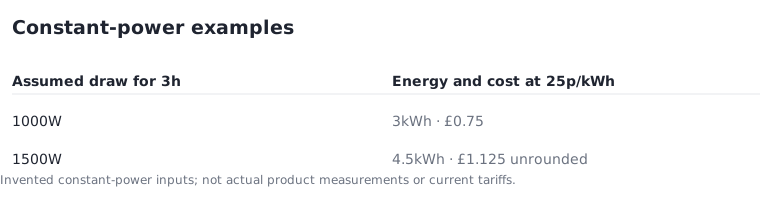
For arithmetic only, assume an appliance draws a constant 1000W for 3 hours. Dividing watts by 1000 gives 1kW, and multiplying by 3 hours gives 3kWh. At an assumed electricity unit rate of 25p per kWh, that scenario costs 75p. None of these inputs is a measured result for the Cirro or a statement of the current UK tariff.
Now change just the assumed draw to 1500W while retaining the same time and rate. The result becomes 4.5kWh and £1.125, normally displayed as £1.13 after rounding. This comparison explains the calculation. It does not forecast how long a particular compressor will operate, what temperature a room will reach or which appliance will use less energy in practice.
Do not use cooling output as the bill input
A calculation sheet should identify the quantity being entered before accepting a number. For an electricity scenario, enter an electrical power assumption and label it as such. A cooling-capacity field answers a different question. Carrying a product headline directly into a bill calculation without its label makes the result difficult to defend.
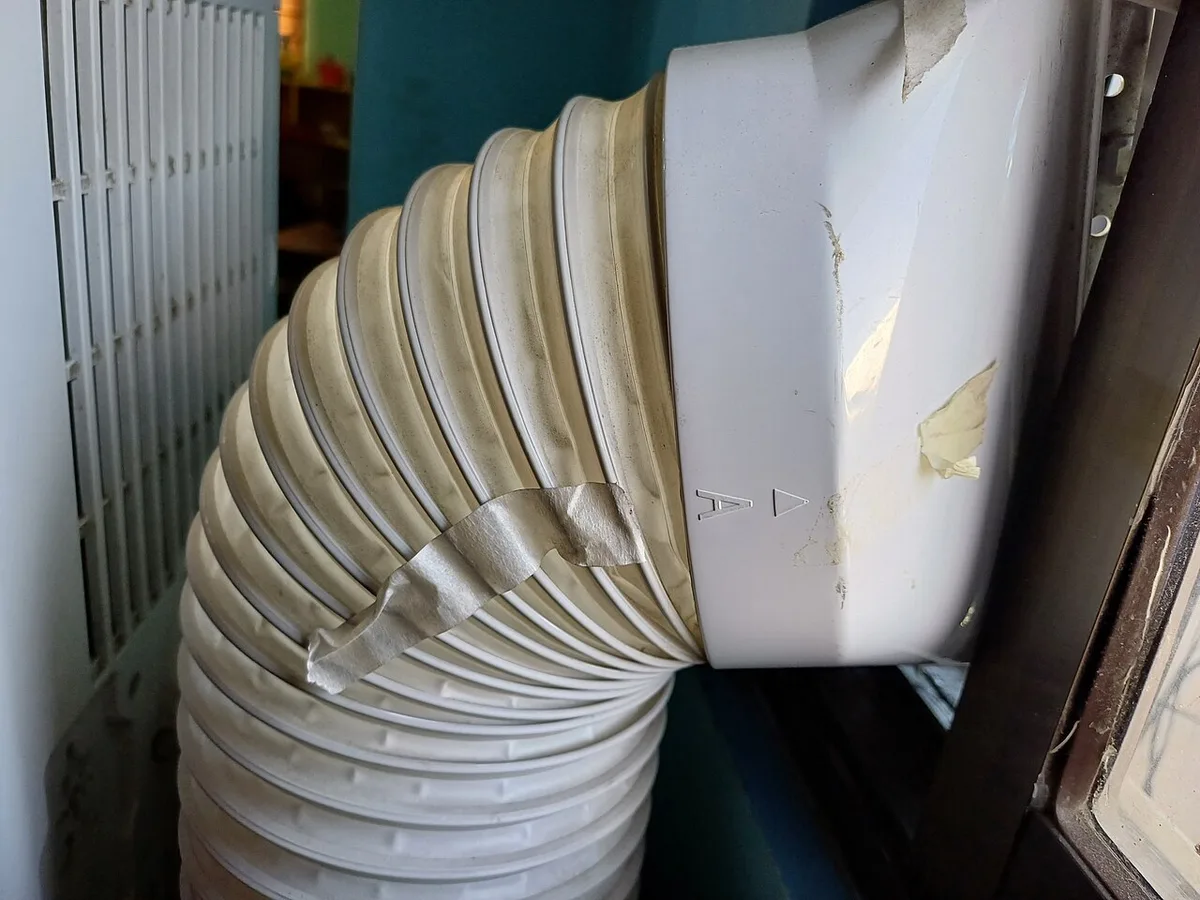
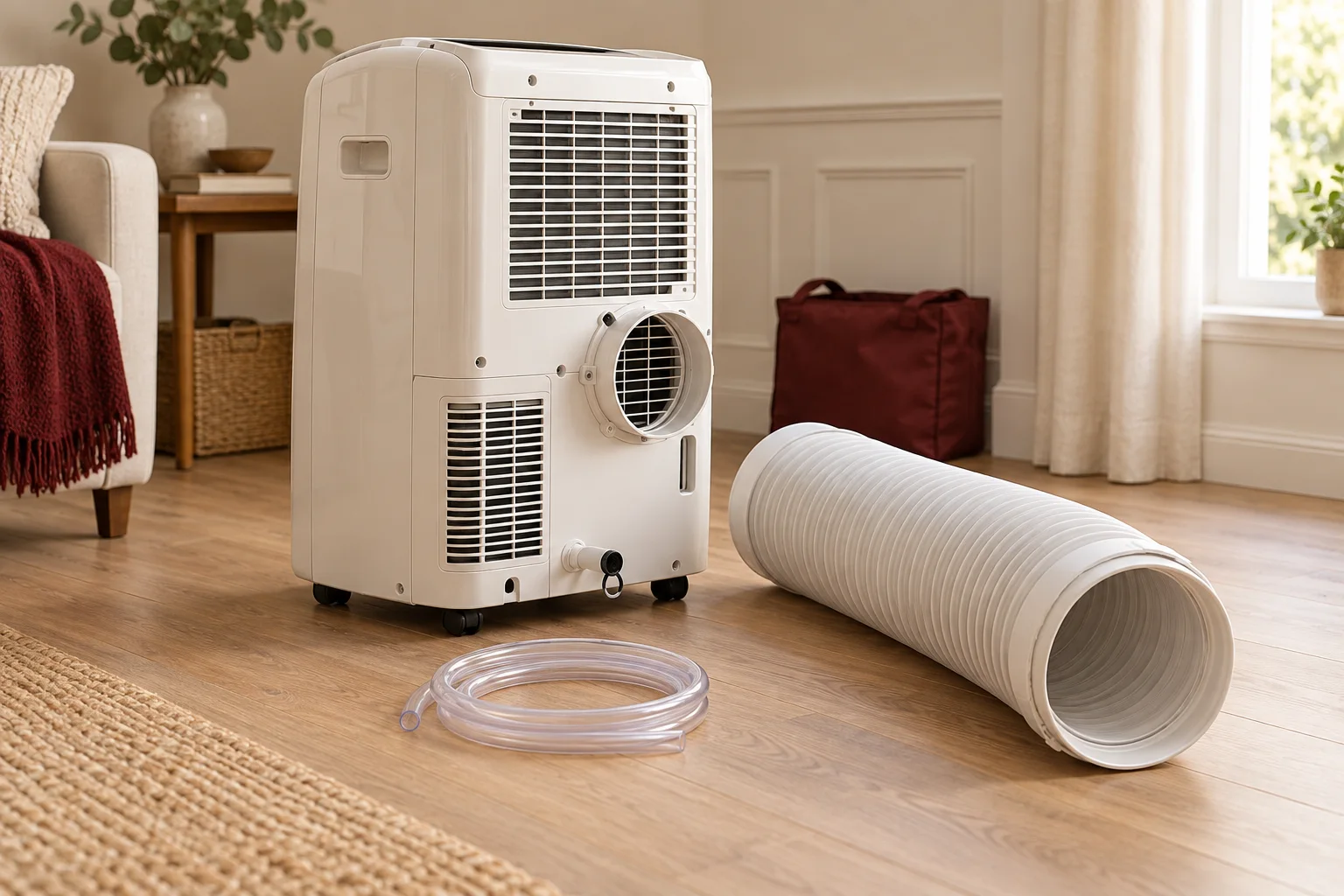
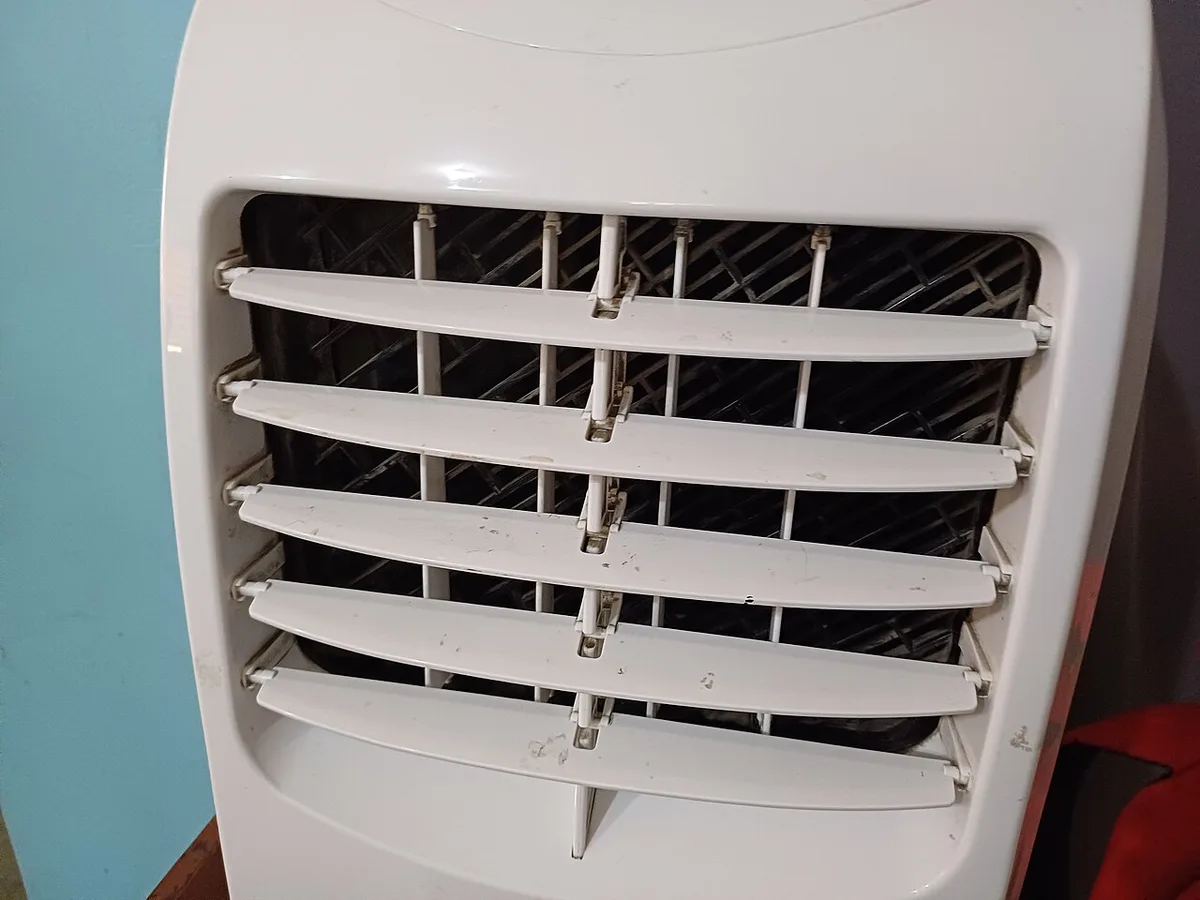
The photographs show an appliance body, its front outlet and a duct connection. They help identify the equipment being discussed, but they contain no electricity measurements. Neither a large outlet nor an imposing cabinet supplies a substitute input value. Treat visual evidence and numerical documentation as different parts of the research.
Keep operating time as an assumption too
A room can be used for several hours without every electrical component necessarily drawing its rated value throughout that period. Our constant-power scenario intentionally leaves that behaviour out. If you use it for budgeting, retain that limitation beside the result rather than presenting the answer as a precise future bill.
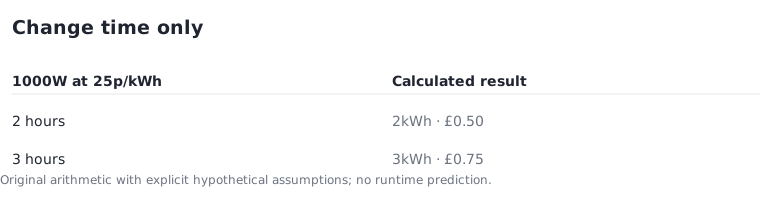
Try a small set of clearly labelled scenarios, changing one input at a time. For example, keep the invented 1000W draw and 25p rate, then compare 2 hours with 3 hours. The arithmetic becomes 2kWh and 50p versus 3kWh and 75p. The point is to reveal sensitivity to assumptions, not to manufacture certainty from extra decimal places.
Finish with a source question you can answer
If the product documentation leaves the electrical field unclear, save the relevant page and ask support which figure is appropriate for the comparison you are making. Keep the response with the model and document version. If you later obtain reliable measured energy data, record its conditions before substituting it for the example.
Use our electricity comparison tool to explore your own transparent inputs. It reports arithmetic rather than a tested operating cost and does not size cooling equipment for a room. A useful shortlist can still contain unanswered technical questions; it is better to preserve those gaps than to disguise them with a confident-looking total.