Make a heater placement record before buying
Separate appliance dimensions, combustible clearance and the route through the room before choosing a portable heater.
Updated:
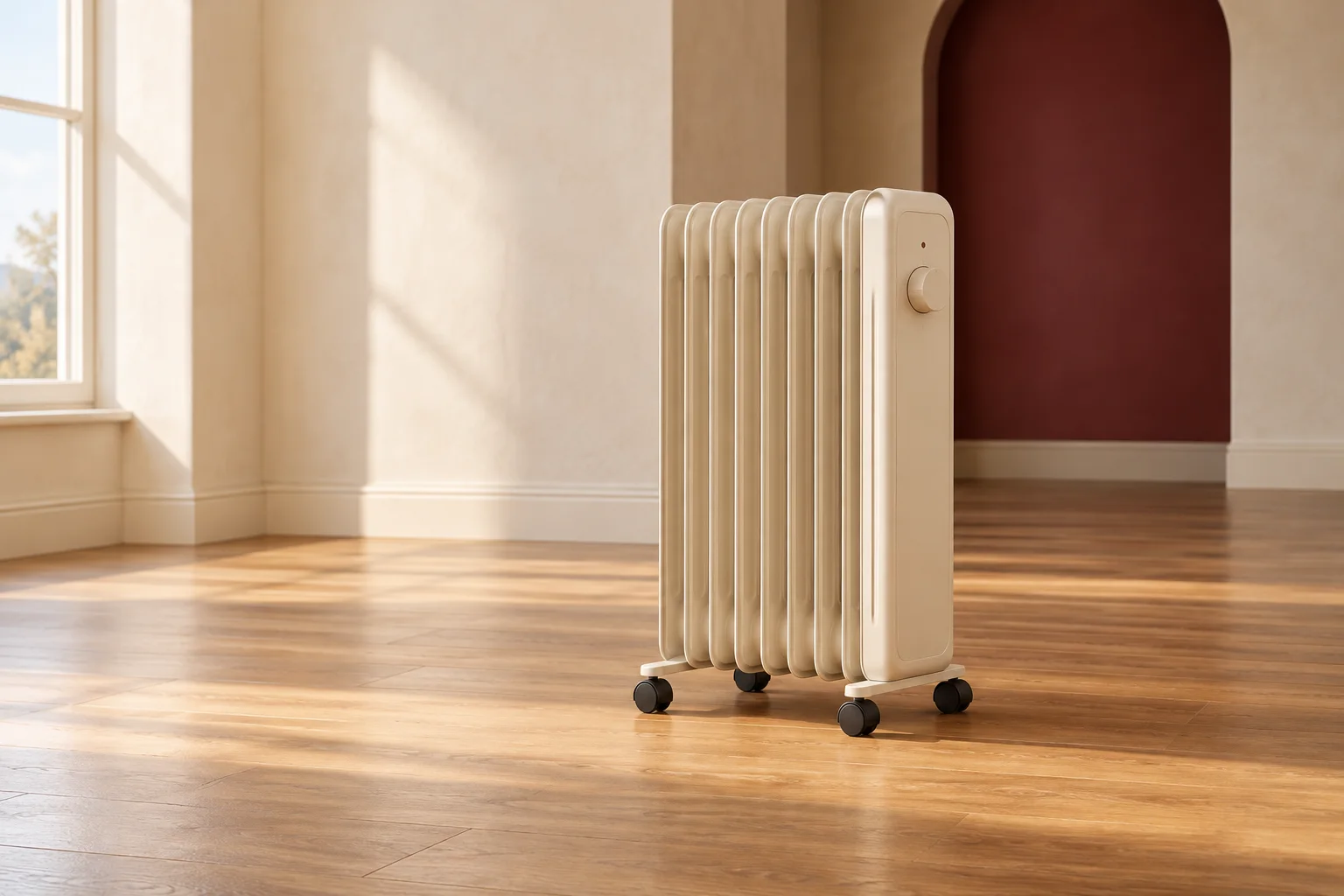
Start with the surrounding materials
Electrical Safety First advises keeping portable heaters at least 1 metre from combustible materials and using a level surface away from anything that might knock the heater over. Its guidance also says not to use an extension lead or leave the heater operating unattended or while asleep. Read the exact product instructions alongside that guidance before deciding on a position.
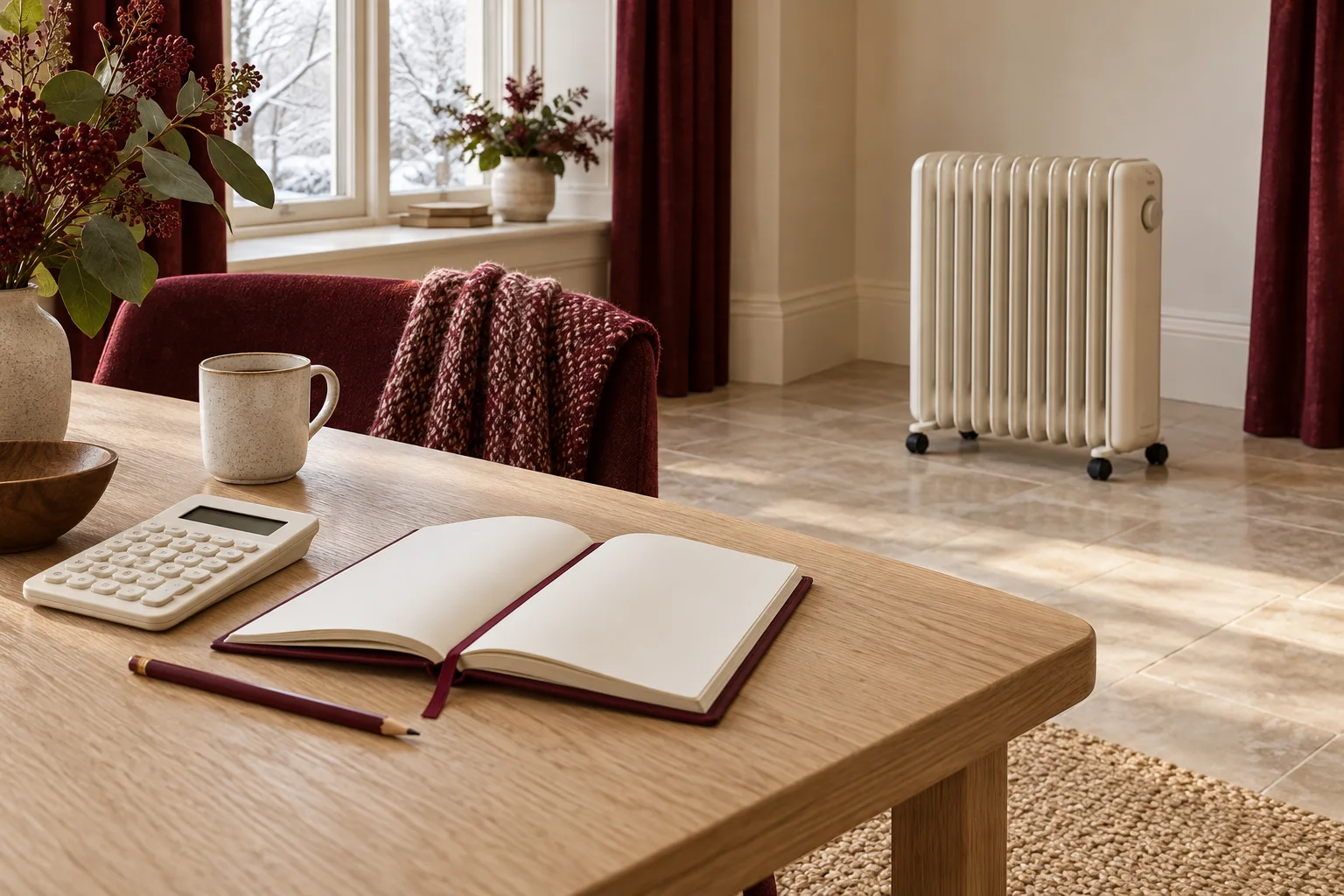
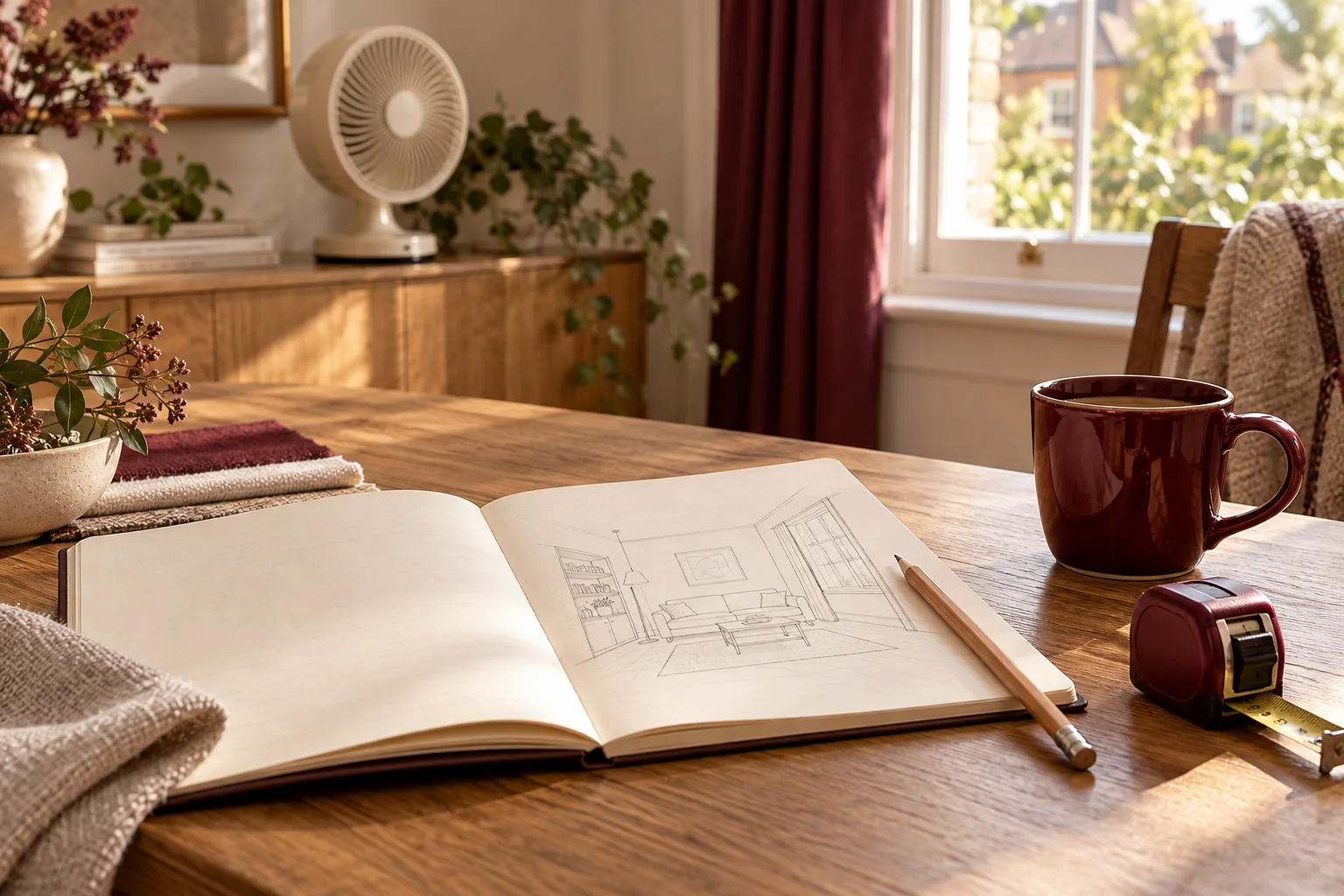
Begin by identifying curtains, upholstery, paper, clothes and the normal walking route. Do not start with an attractive empty rectangle and add the hazards afterwards. A placement record is useful because it makes the surroundings visible before a purchase, not because a drawing can certify that an electrical appliance is safe to use.
Electrical Safety First: portable heaters ?
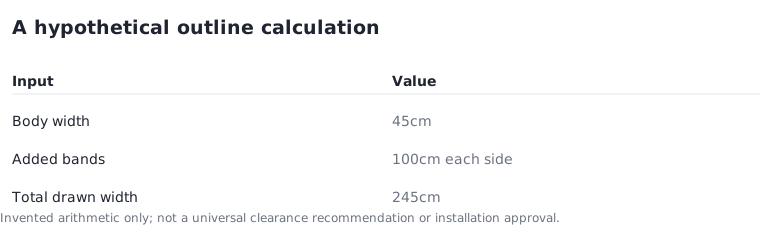
Keep the body outline separate from clearance
Imagine an invented appliance body 45cm wide and 30cm deep. Those dimensions describe only a hypothetical outline; they are not the size of the heaters photographed here. If a planner adds a hypothetical 100cm band on each side, the drawing becomes 245cm wide. That arithmetic illustrates how quickly space needs can exceed the cabinet width.
It is not a universal clearance diagram. Actual instructions may distinguish directions, surfaces and operating arrangements, and the full context matters. Use our footprint tool only to add values you have already established. The tool cannot select safe clearances, assess combustible materials or decide whether the floor and nearby socket arrangement are suitable.
Read the historical photographs critically
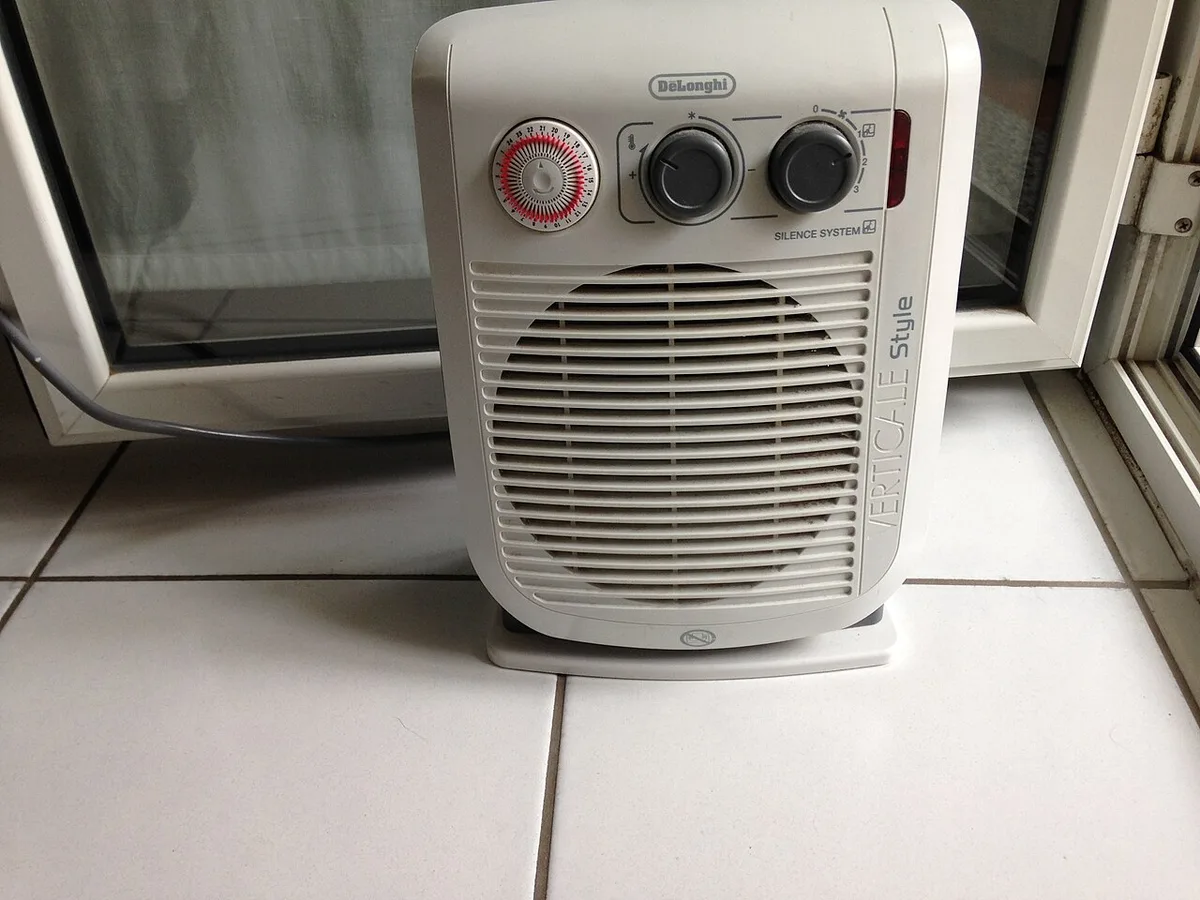
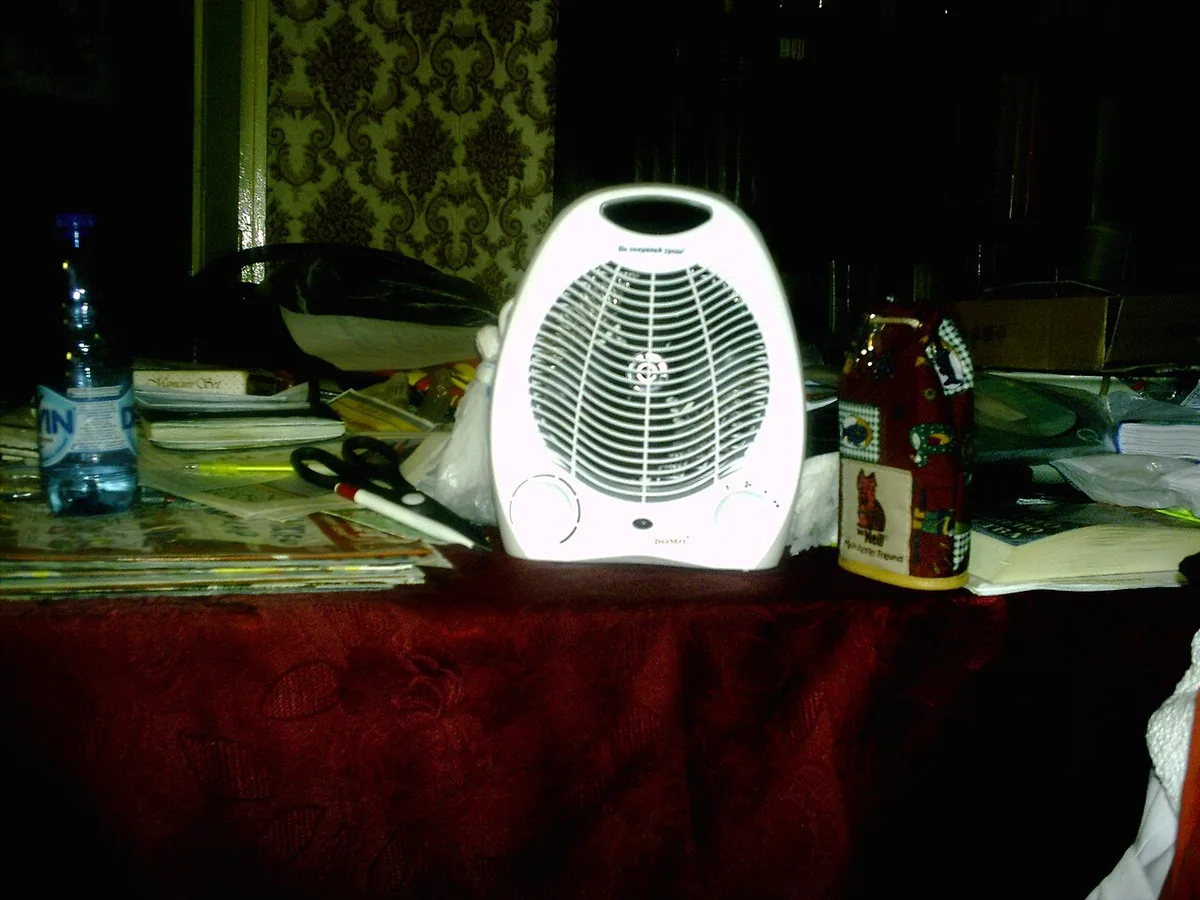
The photograph of a small fan heater surrounded by papers and other household objects is deliberately not presented as good placement. It shows why a product being photographed in a room does not make that arrangement suitable. The visible clutter is a reason to question the surroundings, not a styling suggestion.
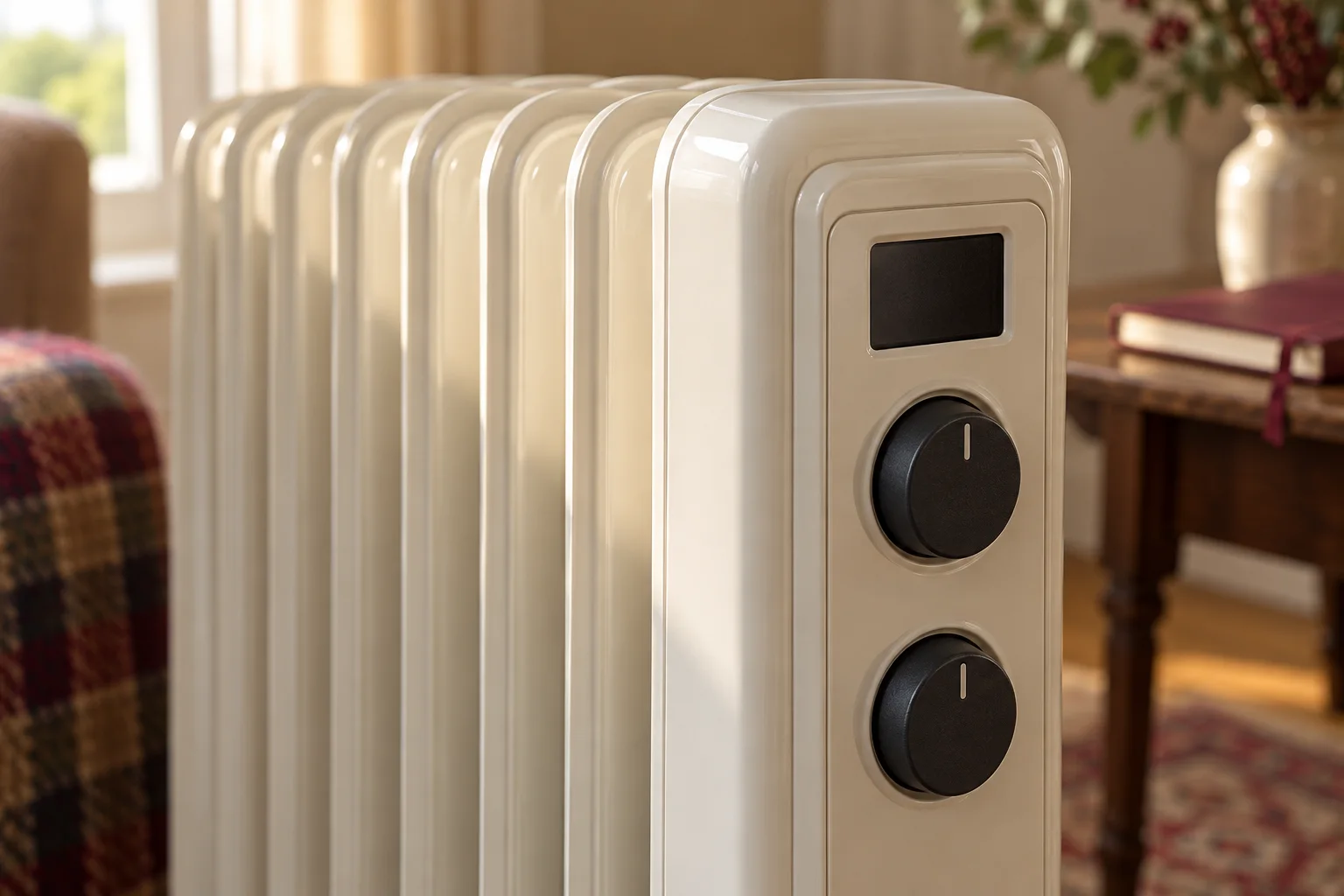
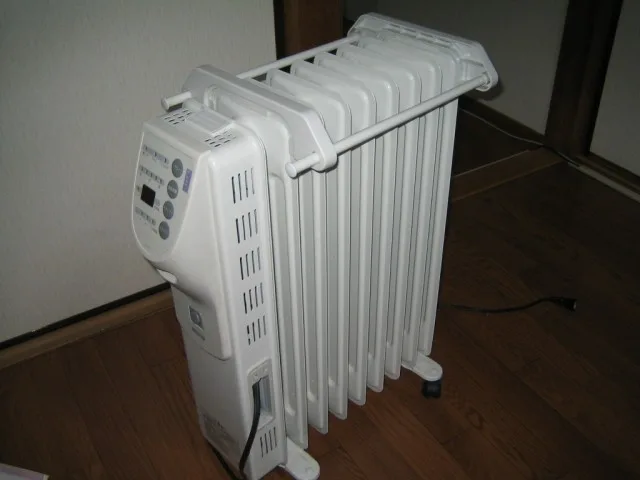
The oil-filled radiator photograph includes a rack, while the upright heater photograph shows a different support and control arrangement. Neither image grants permission to dry clothes on a heater, place it close to a wall or copy its location. Use the pictures to recognise the appliance format and controls, then return to the relevant instructions for the conditions of use.
Check access and ordinary movement
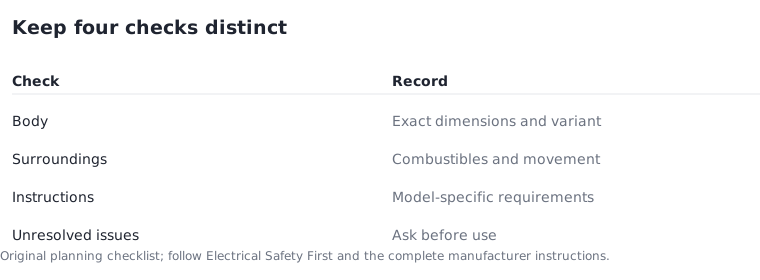
Record how someone walks past the position, reaches the controls and accesses the socket. Consider whether furniture is normally moved, curtains are drawn or household items accumulate there. A drawing made with every object carefully removed may not represent how the room is actually used on an ordinary day.
Keep unresolved questions in the record. If you cannot establish a suitable position from the instructions, ask the manufacturer or a competent professional before using the product. Do not solve a poor location by adding an extension lead or improvising a stand. A portable label describes a product category; it does not make every available corner appropriate.
Match the record to the exact model
Use the manufacturer's manual finder with the full model identifier. Check that the document covers the correct variant and intended portable arrangement. Keep the source link, date and relevant diagram reference with the sketch. If the shortlisted model changes, review the placement record again rather than carrying over the previous dimensions and assumptions.
The result should be a clear decision about what is known and what still needs an answer. We have not inspected your room or tested the photographed appliances. This article supports a careful purchase discussion; it does not replace the product safety instructions, provide an installation approval or recommend unattended operation.
Dimplex: find the exact model manual ?