Calculate a heater cost scenario without guessing the bill
Use labelled electrical power, time and tariff assumptions, while keeping thermostat behaviour and safe use outside the arithmetic.
Updated:

Write down the three inputs first
A transparent electricity scenario starts with assumed electrical draw, operating time and the unit rate. For an invented example, use 2000W, 2 hours and 25p per kWh. Convert 2000W to 2kW, multiply by 2 hours to obtain 4kWh, then multiply by £0.25 to obtain £1. These are illustrative inputs, not a measured heater result or a claim about today's tariff.
Keep the assumptions beside the answer. A bare statement that a heater costs £1 to run omits the information needed to understand or update it. If your own unit rate is different, replace that input rather than searching for a universal hourly price. Use the electrical field appropriate to the exact model and explain any uncertainty.
Distinguish elapsed time from constant draw
The Dimplex ML instructions describe thermostat-controlled switching in MANUAL ON mode. That example shows why a heater being enabled for a period does not establish uninterrupted draw at a chosen rating. This guide does not infer a duty cycle for your room or promise that the illustrative cost is what you will pay.
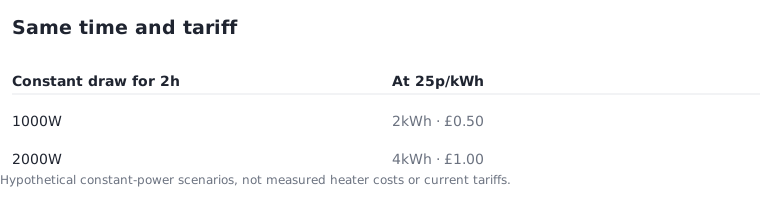
For comparison only, a constant 1000W assumption over the same 2 hours at 25p per kWh produces 2kWh and 50p. It does not establish that a lower setting will achieve the same result in the same time. Comparing arithmetic scenarios is different from comparing measured heating performance or comfort.
Dimplex ML convector UK instructions, issue 2 ?
Use a time comparison with the limitation visible
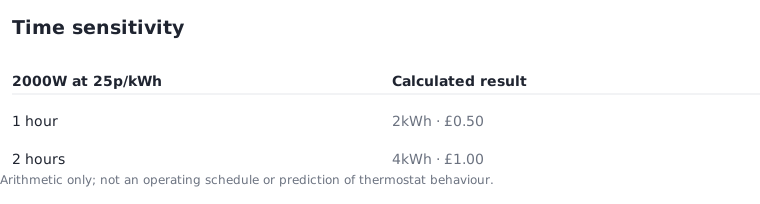
Retain the invented 2000W draw and 25p unit rate, then compare 1 hour with 2 hours. The calculated values are 2kWh and 50p versus 4kWh and £1. This is a simple sensitivity check: changing time changes the total under the constant-power assumption. It is not a suggested heating schedule.
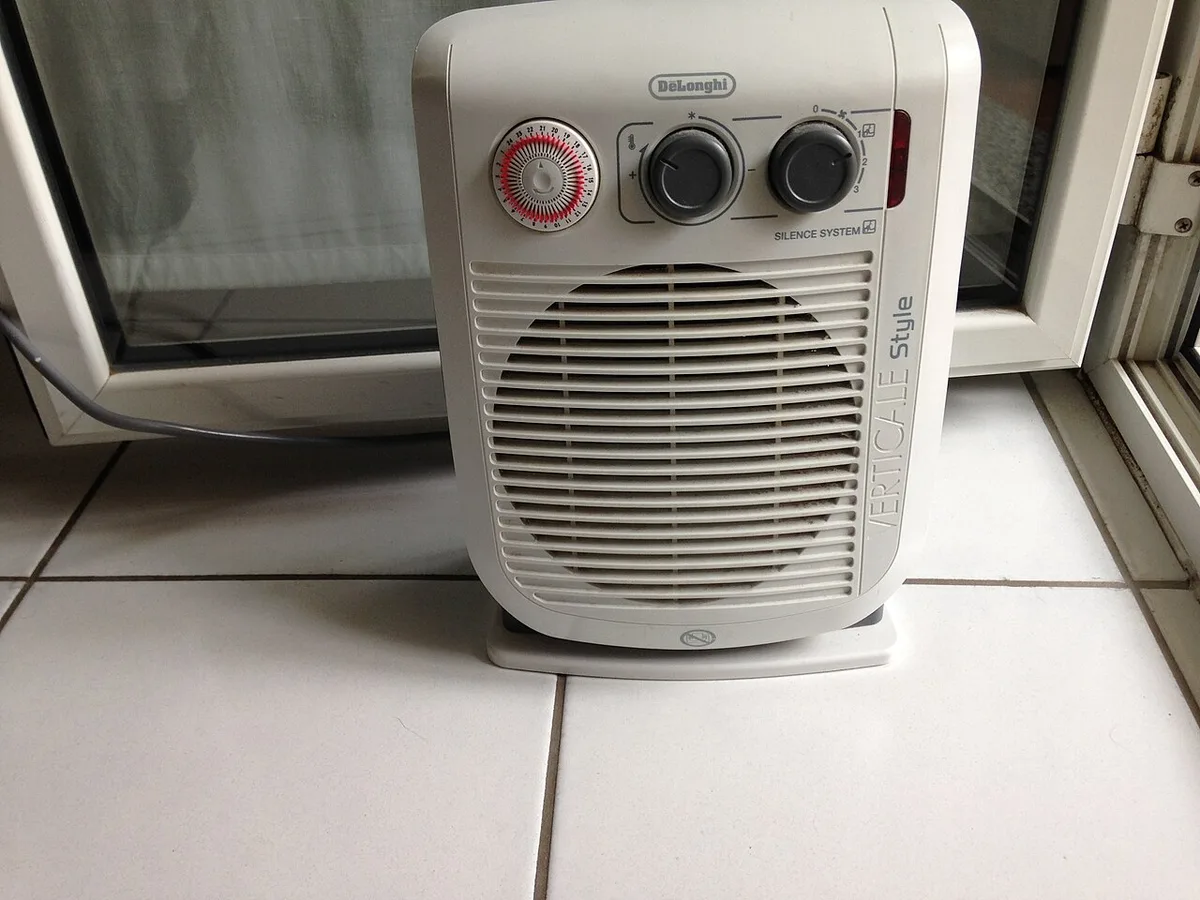
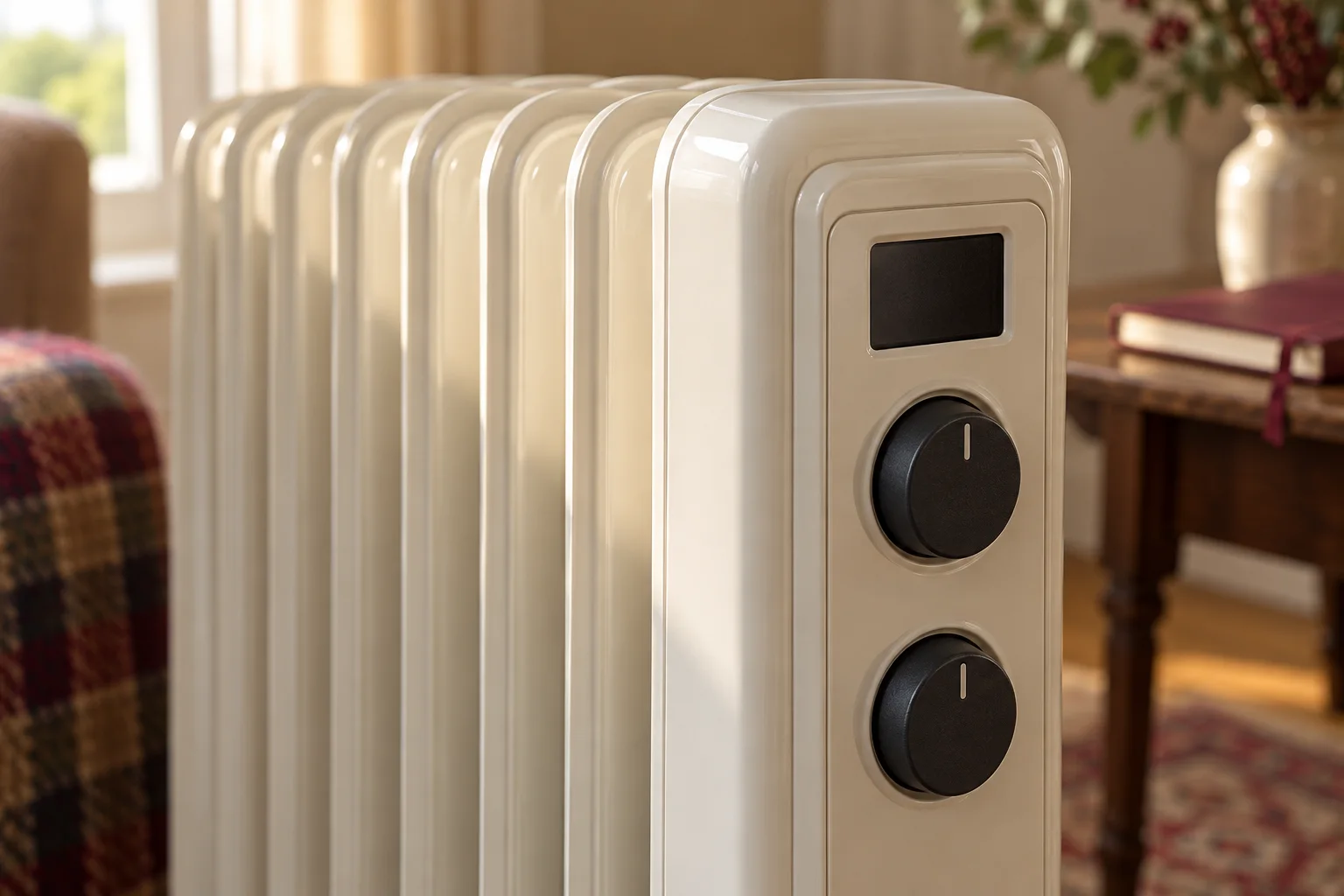
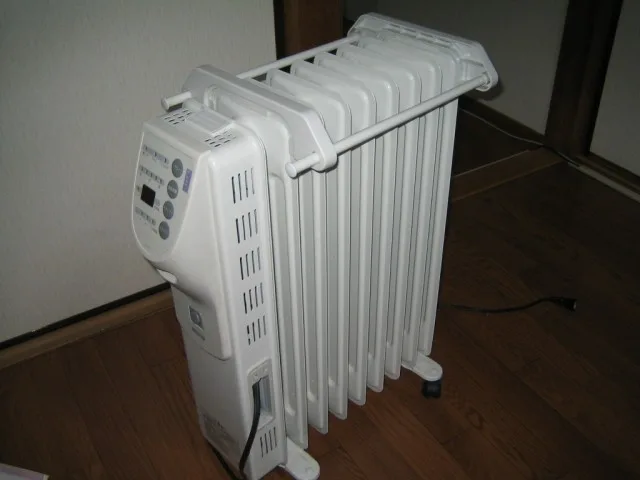
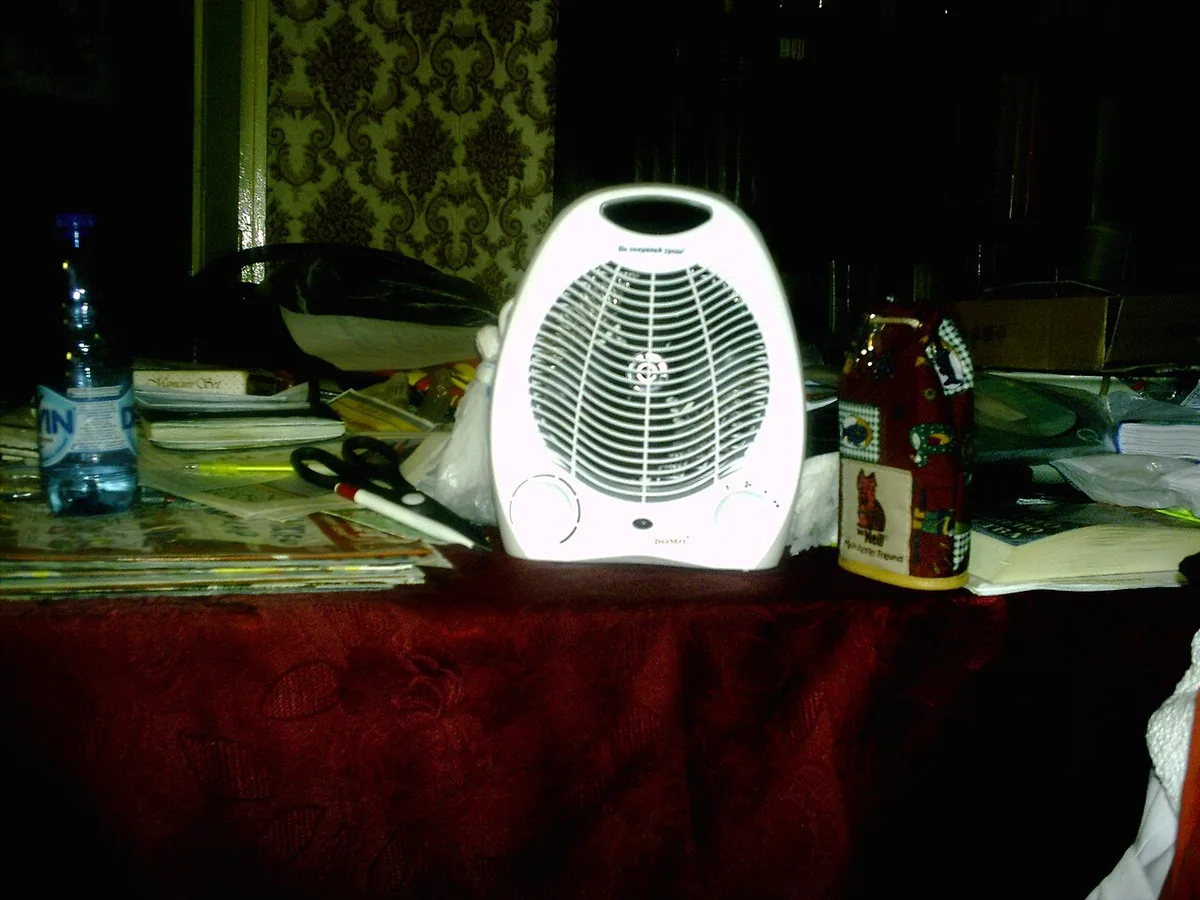
The historical photographs show controls and different heater forms, but they contain no energy measurements. A rotary dial, radiator fins or a fan grille cannot establish the electricity consumed during a particular session. Do not present an image of a product beside a calculated number as if it were evidence that the appliance was tested.
Keep cost arithmetic separate from safe operation
Electrical Safety First advises against unattended or sleeping-time use of portable heaters and against powering them through extension leads. A favourable result in a cost calculator does not override those precautions or the exact product instructions. Do not use a cheaper-looking scenario as a reason to adopt an unsuitable operating arrangement.
If an assumed period does not fit the permitted use of the appliance, it is not a useful household plan merely because the multiplication works. Keep safety and placement checks outside the financial comparison so they remain requirements rather than optional factors that can be traded away for a lower number.
Electrical Safety First: portable heaters ?
Save an editable scenario rather than a promise
Record the model, electrical field, assumed hours, unit rate and calculation date. Mark which inputs came from documentation and which were chosen for illustration. If you later obtain reliable consumption evidence, record its conditions before replacing the assumption. Do not merge figures from different models or different test contexts into one confident total.
Our electricity tool lets you change the inputs and compare two scenarios. It calculates energy and cost under the stated assumptions; it does not forecast thermostat behaviour or select a heater. The useful outcome is a calculation that another person can check, with enough context to understand both the result and its limits.