Read fan sound figures in their stated context
Keep the source label, speed and measurement conditions beside a sound number instead of treating a low headline figure as a room guarantee.
Updated:
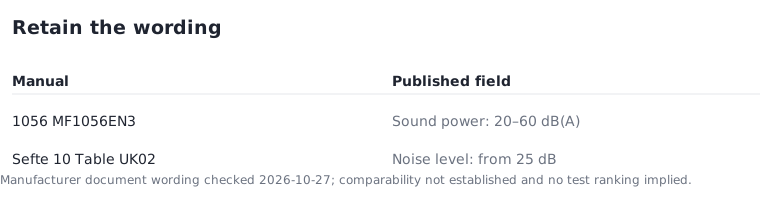
Copy the complete sound field
The MeacoFan 1056 manual labels a sound-power field as 20 to 60 dB(A). The Sefte 10 Table manual uses a different presentation, stating noise level from 25 dB. Preserve those labels and qualifiers. The word from and a published range do not describe the same kind of promise as one unqualified number.
This guide does not establish that the two figures are directly comparable or predict what either appliance will sound like in your room. The first useful step is to record what the documents actually say. A shortlist should keep the label, unit, model and source together, rather than retaining only the smallest number from each product page.
MeacoFan 1056 manual MF1056EN3, November 2022 ? Meaco Sefte 10 Table manual UK02 ?
Ask which operating condition the figure belongs to
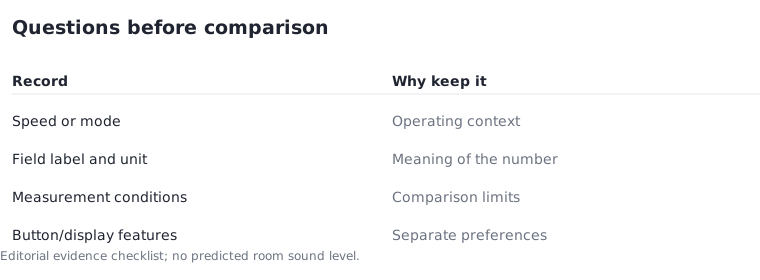
A fan can have several speeds and modes, so the relevant question is which condition accompanies the published sound figure. If a page does not state it, record the omission and ask the manufacturer. Do not assume that the quietest advertised condition also produces the maximum airflow or matches the setting you intend to use.
Make a comparison row for the intended use, such as seated work at a particular position, without inventing a predicted sound level. Record the setting information that is actually available and separate it from your preference. A number can help frame a question, but a missing measurement condition should remain visible rather than being filled with a guess.
Do not turn a photograph into acoustic evidence
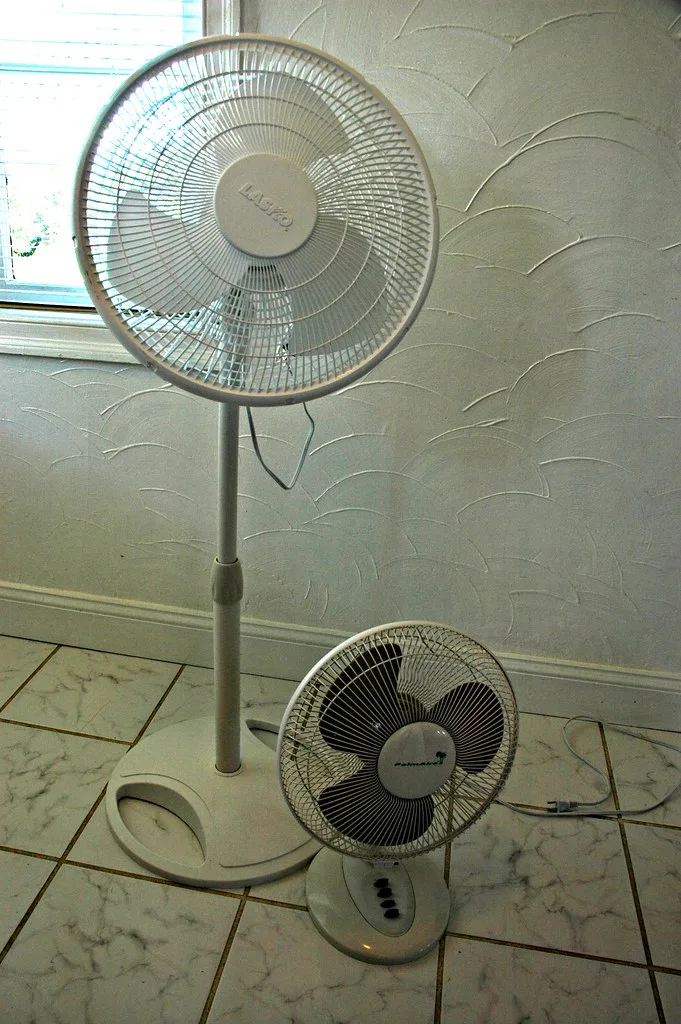
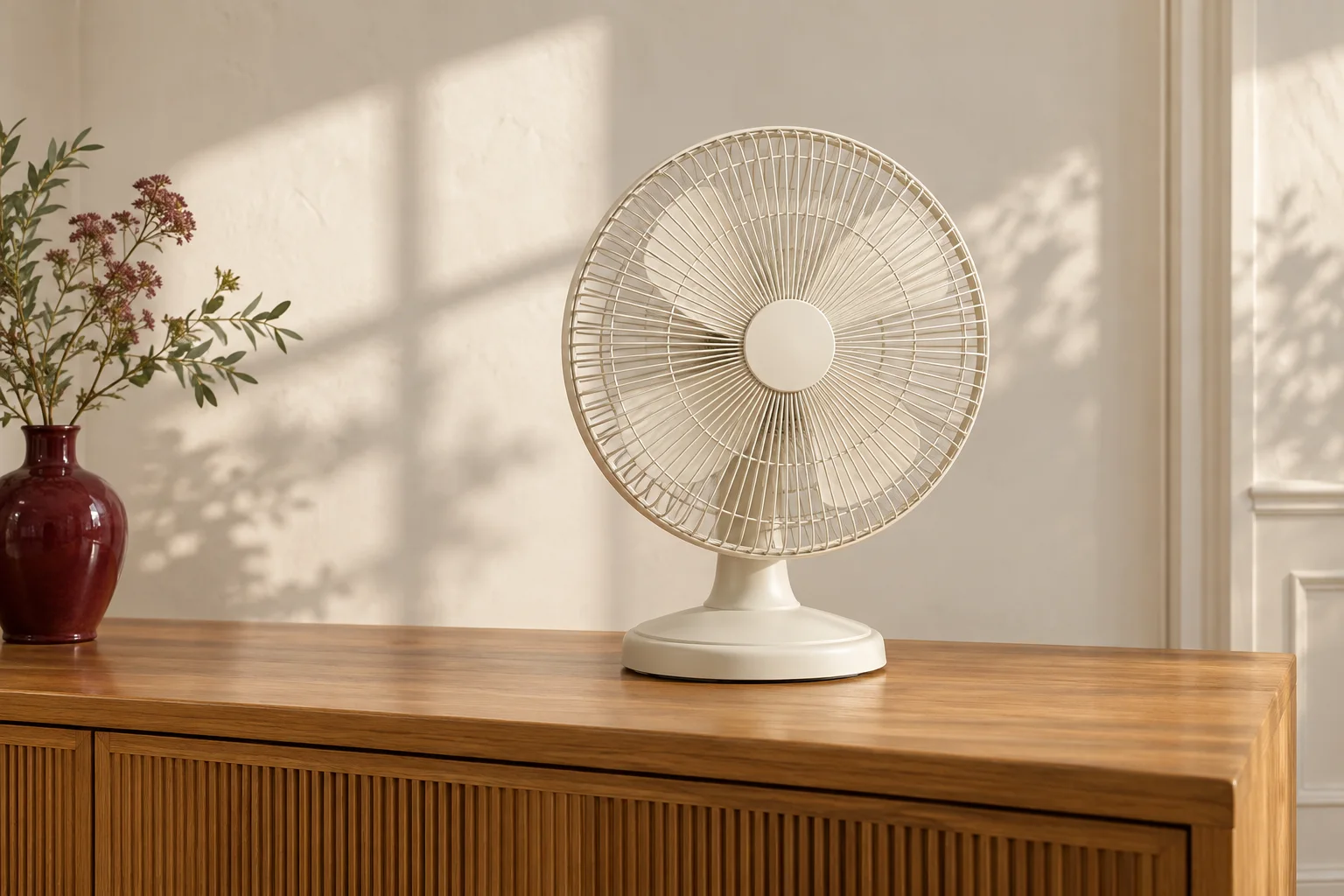
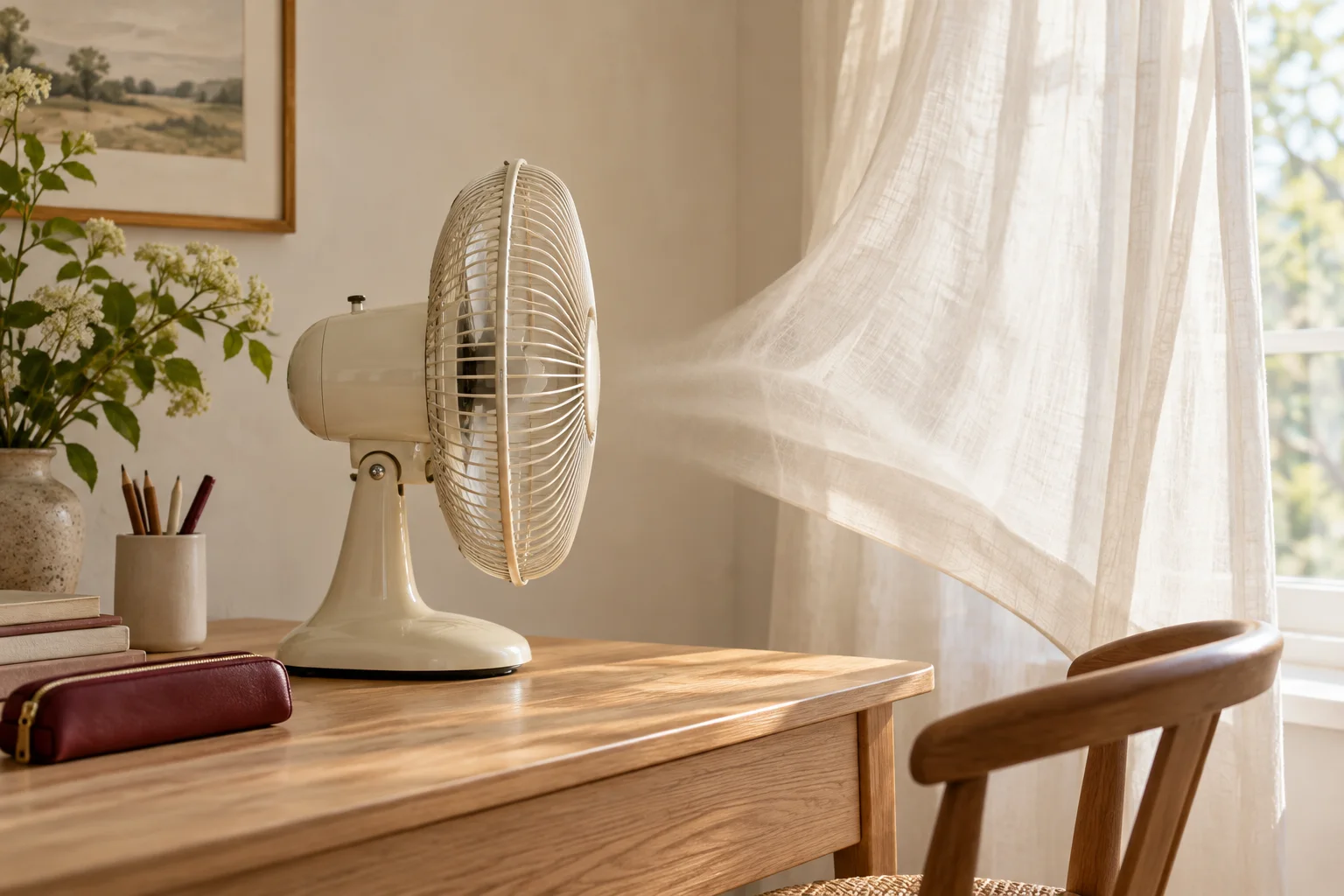
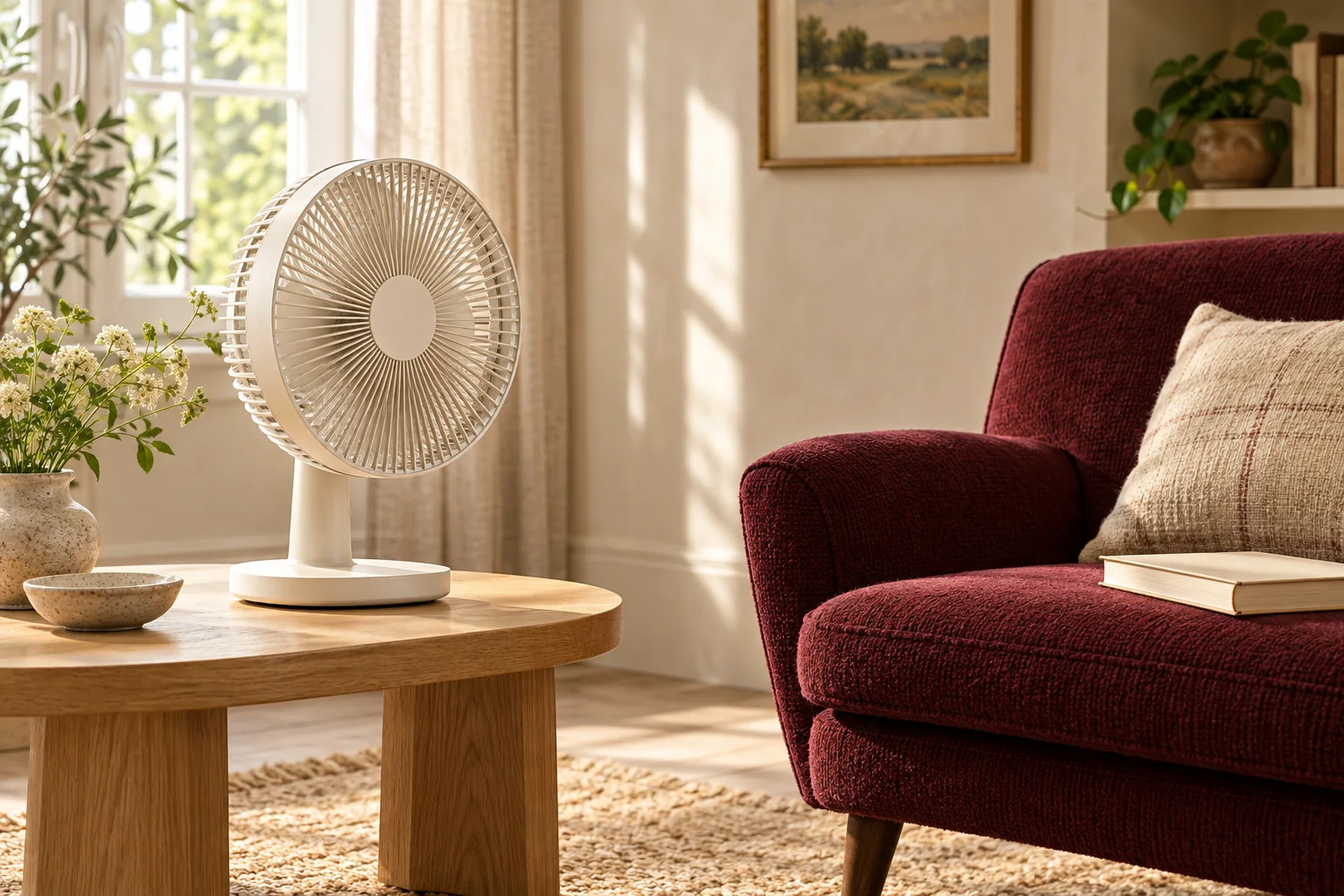
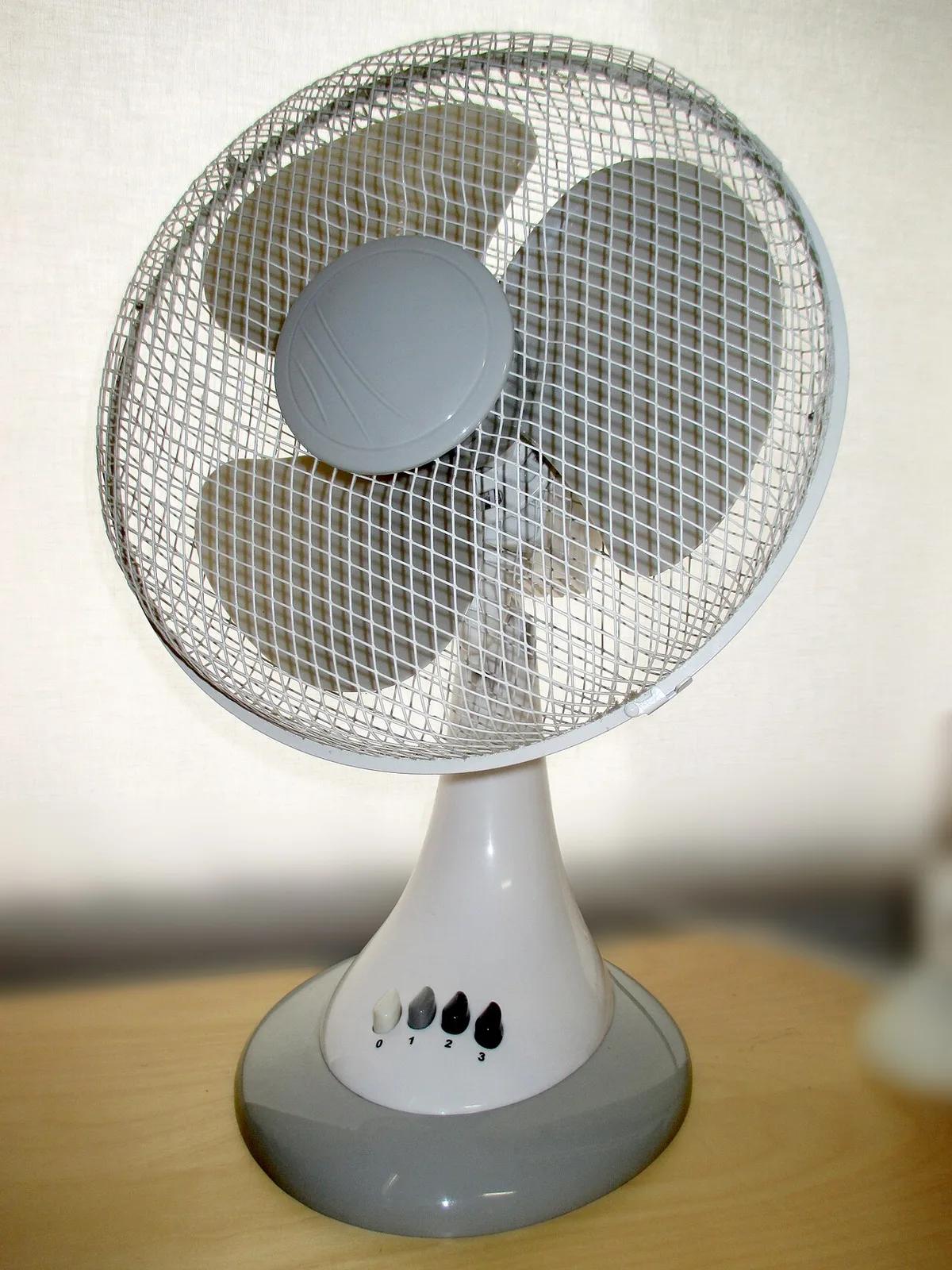
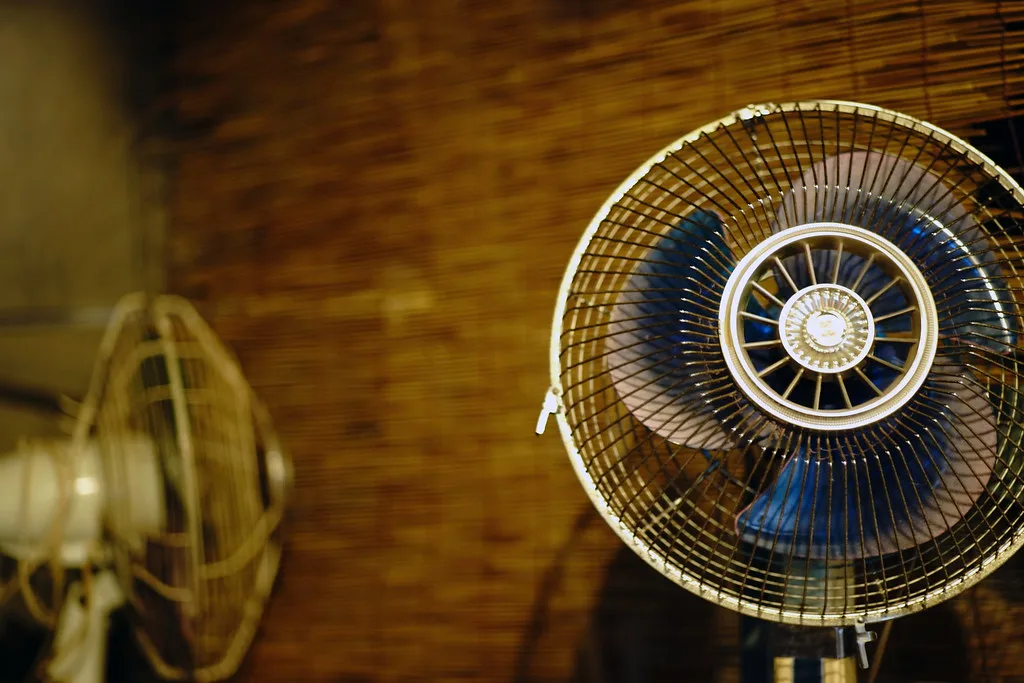
The full fan photograph shows a grille, base and speed buttons. The close-up shows another grille and blade arrangement, while the paired image shows two different formats. These are useful observations about visible design. None of the photographs records sound, and a larger head or taller stand does not establish a quieter experience.
Avoid captions or descriptions that imply a test took place simply because a product looks at home in a room. A historical photograph can help you identify the parts discussed in a guide, but it cannot supply a sound measurement, a comparison result or a review of a current model. Keep those evidence types separate.
Separate button sounds and display behaviour
A preference for quiet operation may involve more than the continuous fan sound. The Sefte manual separately describes a mute control for button sounds and a Night mode that changes speed and display behaviour. Treat those as documented control features, not as proof that the fan is inaudible or that every mode has the same airflow.
Write down whether you care about button sounds, display brightness, automatic changes or the operating sound itself. Those questions can lead to different sections of the manual. A mode with an appealing name may still differ from the behaviour you need, and changing a control can affect more than one part of the experience.
Meaco Sefte 10 Table manual UK02 ?
Leave the comparison with an honest next step
Keep a short evidence sheet containing the source wording, the known settings and the unanswered questions. Where the information is not comparable, say so. Ask the manufacturer for the condition behind the figure, and review the seller's actual return terms before purchase if suitability remains uncertain. Do not invent a trial period or assume a universal right to use and return a product.
Our conclusion is limited: a sound number should travel with its context. We have not measured these fans, ranked them acoustically or predicted a sound level at your desk. The guide helps you avoid an unsupported comparison and collect a more useful answer before spending money.