Compare two electricity scenarios with the same assumptions
Hold time and tariff constant, change one power input and keep the result separate from a product-performance ranking.
Updated:

Name the comparison before entering numbers
A comparison is easier to interpret when the question is explicit. You might want to see how two assumed electrical draws affect a seasonal total, rather than decide which appliance performs better. The Meaco fan manuals provide separately labelled operating and power information, but this article uses invented values to explain the calculation, not selected product ratings.
Write Scenario A and Scenario B before adding any numbers. State that both assume constant draw during the entered hours. Keep the actual appliance model and source field in a separate note if you later use documented inputs. Do not combine a maximum airflow claim with an unrelated low-power setting to imply a tested efficiency result.
MeacoFan 1056 manual MF1056EN3, November 2022 ? Meaco Sefte 10 Table manual UK02 ?
Hold the shared inputs constant
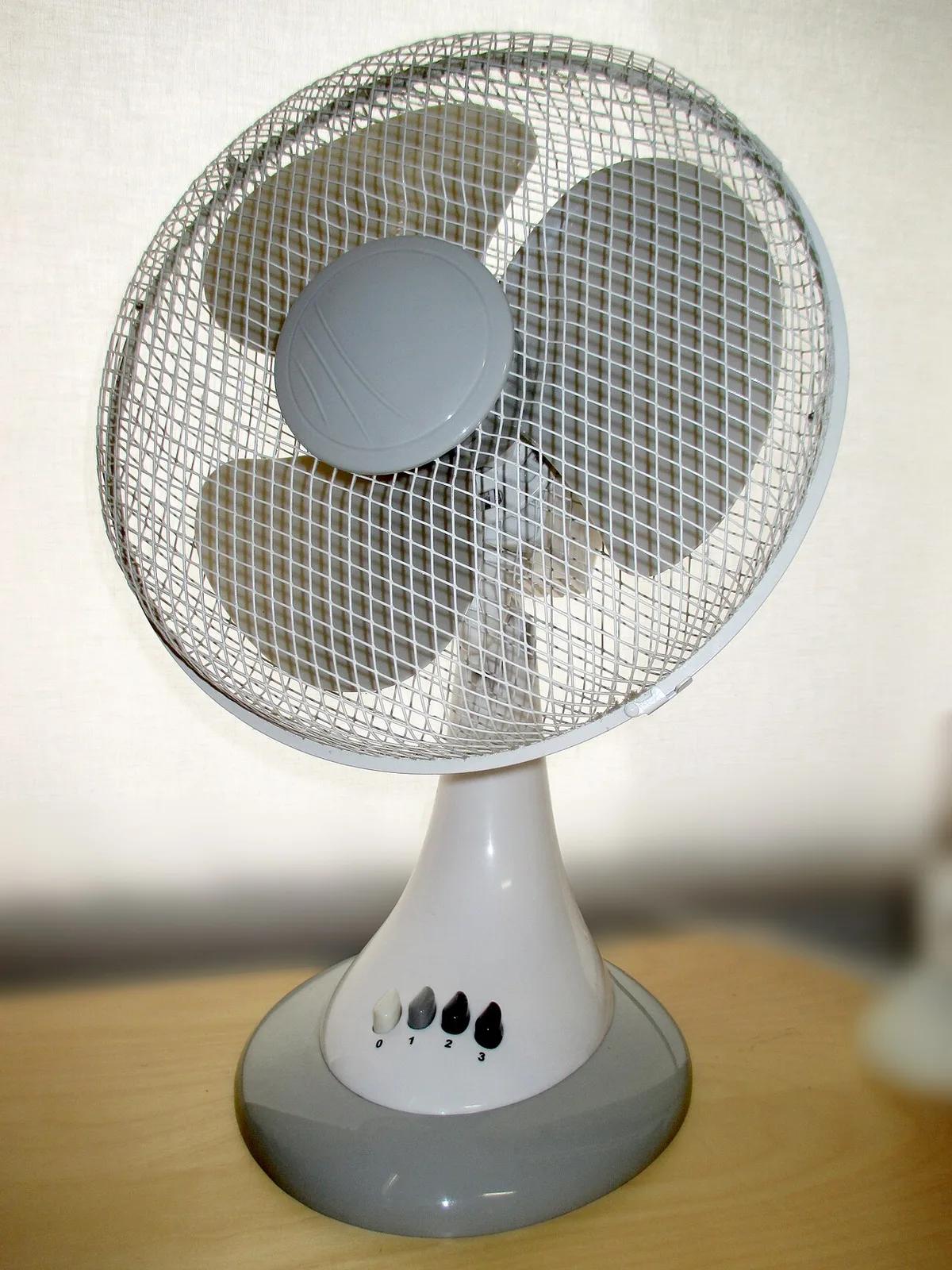
For an invented seasonal example, assume Scenario A draws 30W and Scenario B draws 50W. Both run for 6 hours per day over 90 days, and both use an assumed rate of 25p per kWh. The shared time is 540 hours. These inputs are not a recommended schedule, a current tariff or measured operation of the photographed fans.
Convert the power values to kilowatts before multiplying. Scenario A becomes 0.03kW multiplied by 540 hours, giving 16.2kWh. Scenario B becomes 0.05kW multiplied by 540 hours, giving 27kWh. Keeping the shared inputs identical makes the effect of the different power assumptions visible.
Show the cost and the difference
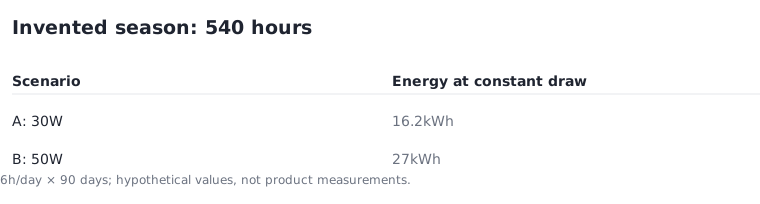
At the assumed £0.25 per kWh, Scenario A costs £4.05 and Scenario B costs £6.75. The arithmetic difference is £2.70 for the invented season. That difference belongs to the stated inputs; it is not a promise that choosing one actual product over another will save £2.70.
Do not drop the duration when quoting the result. A seasonal total and an hourly figure answer different questions. Keep energy in kWh beside cost in pounds, so the reader can change the tariff without reconstructing the entire calculation. Round the displayed money consistently while retaining enough precision for the arithmetic to be checked.

Change one assumption at a time
If you want to see the effect of a shorter season, alter the days while retaining the other inputs. If you want to explore a different tariff, change only the rate. Changing power, hours and tariff together can produce a large difference without showing which assumption caused it.
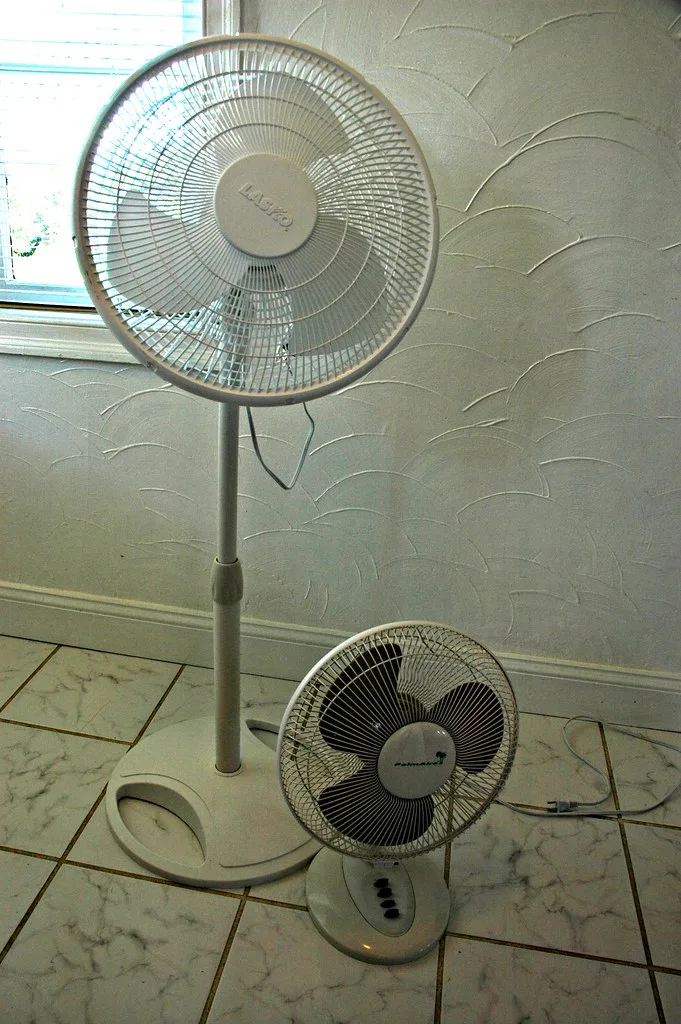
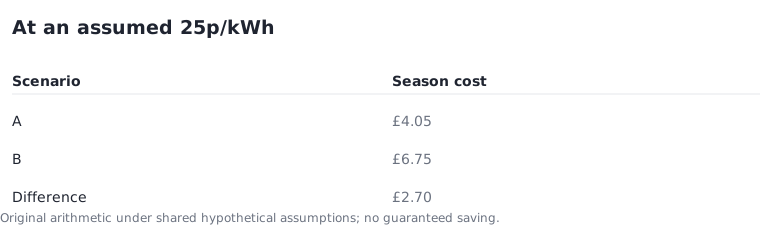
The photographs illustrate fan formats and visible controls, not measured electrical draw. A larger head or a different base does not supply a valid number for the tool. Likewise, a speed button does not establish the watts used at that setting unless the relevant evidence provides it. Leave uncertain values labelled as assumptions.
Use the tool as an arithmetic worksheet
Our electricity comparison tool starts with the same invented example and lets you replace the inputs. It rejects missing, negative and out-of-range values and formats the result in pounds for this UK site. That validation checks the input format; it does not verify that your power assumption is correct for a real appliance.
Save the model, source, assumptions and date if you use the result in a purchase decision. Performance, placement and permitted operation still need separate consideration. We have not tested the pictured fans or ranked their efficiency. The useful result is a transparent calculation whose limits remain visible alongside the answer.