Plan storage for the appliance and its separate parts
Measure the stored arrangement, label removable equipment and keep storage conditions distinct from operating clearances.
Updated:
Begin with the storage instructions
The Cirro manual treats storage as a separate task from ordinary operation, including preparation of the appliance and detached equipment. Use the complete instructions for the exact model before putting it away. A guide to fitting a unit beside a window is not a substitute for its storage requirements.
Find the model identifier and the relevant document before measuring a cupboard. Record any condition that limits where the appliance may be stored, rather than assuming an unused corner is suitable. This article helps organise space and records; it does not shorten the manufacturer's preparation procedure or approve a particular storage room.
Meaco Cirro 12000 and 12000CH manual EN01 ?
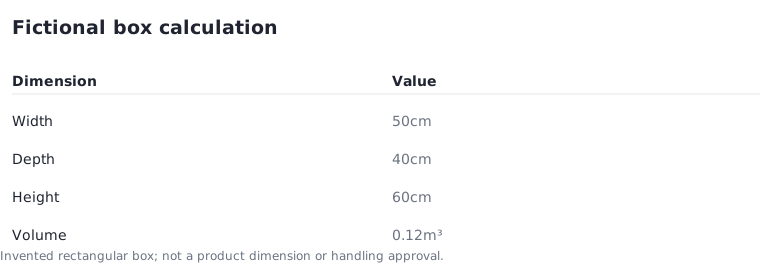
Measure a fictional box to understand volume
For an invented example, a storage box 50cm wide, 40cm deep and 60cm high has a rectangular volume of 120,000 cubic centimetres, equivalent to 0.12m³. Those dimensions are not the packaged size of any appliance pictured here. They simply show why height belongs in the storage plan as well as the floor outline.
A box fitting inside a cupboard does not establish that it can be lifted or moved there safely. Record the opening, access route and handling instructions separately. Do not propose stacking heavy appliances or placing them on an unsuitable shelf merely because a volume calculation appears to work.
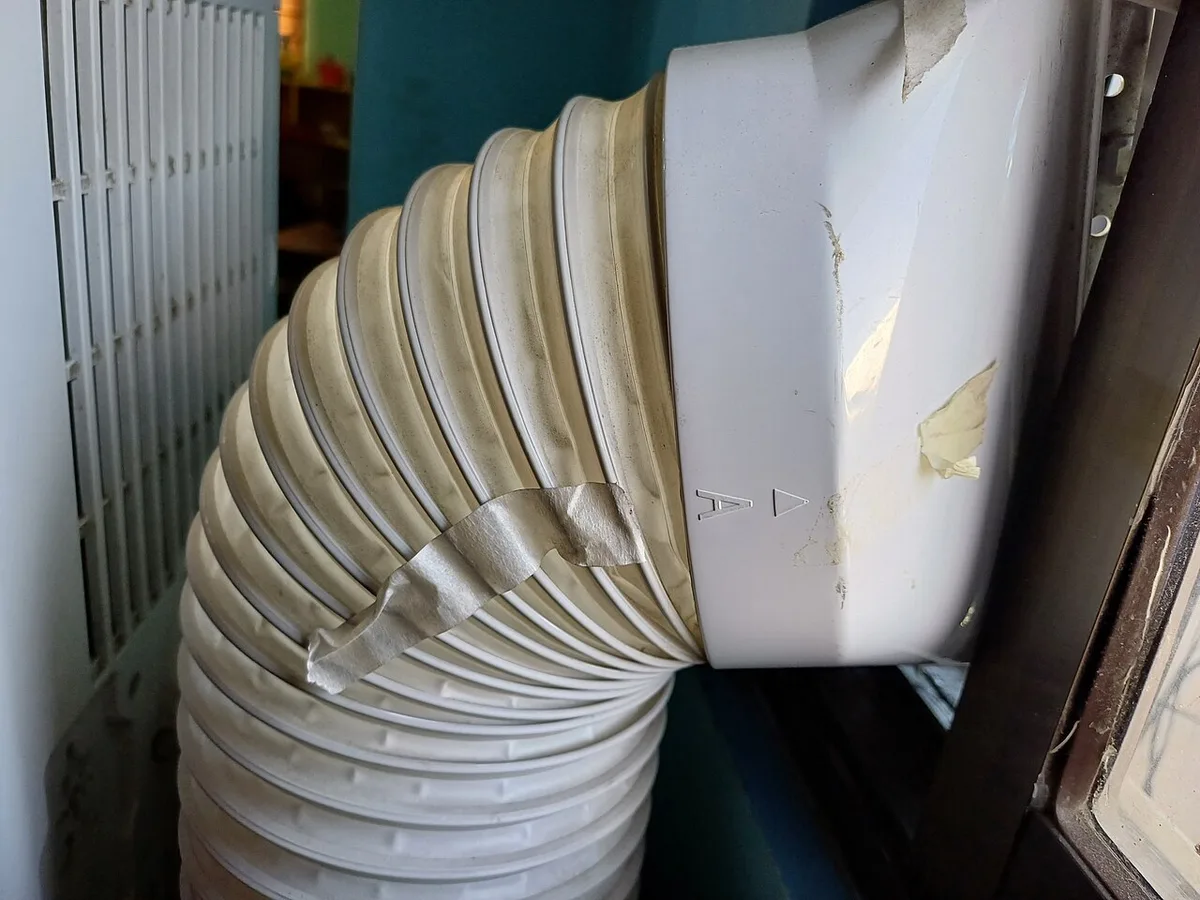
Give separate components their own place
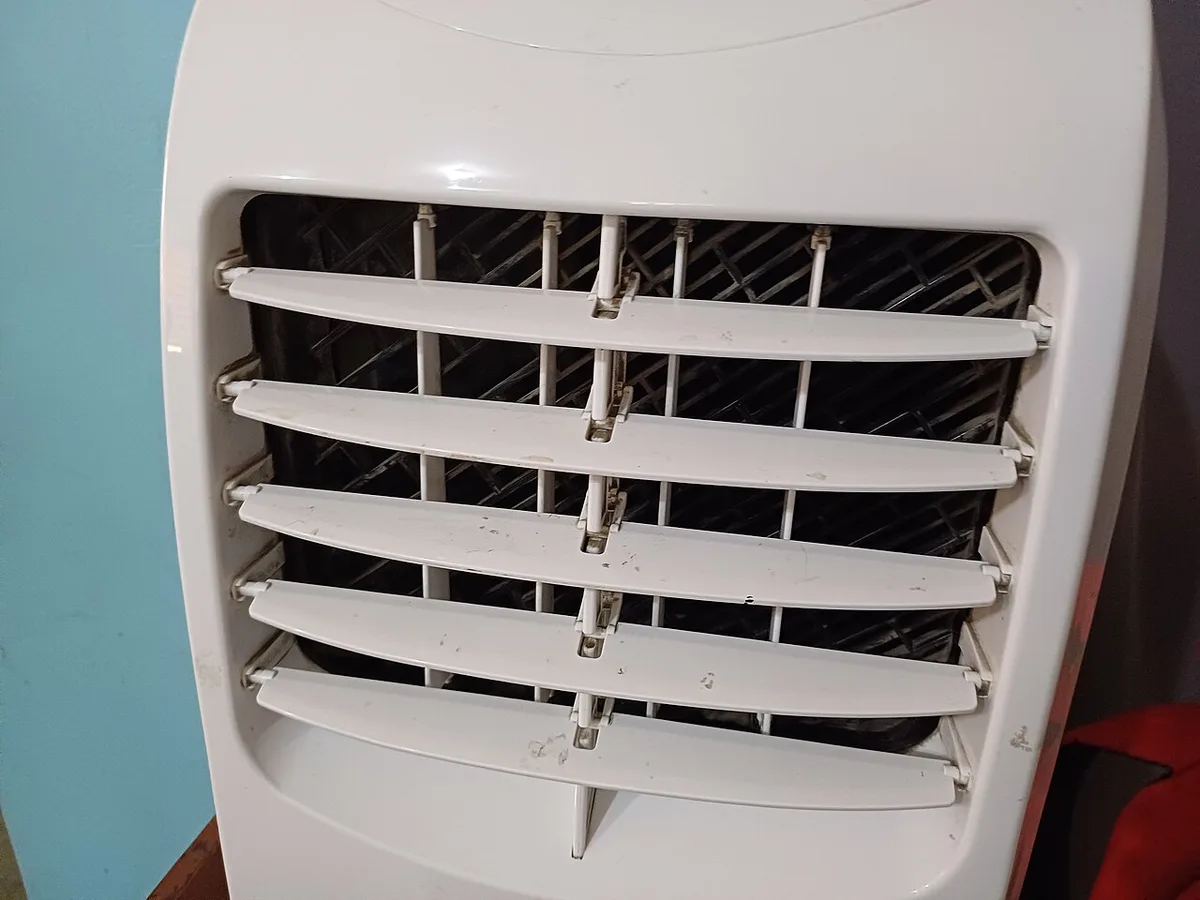
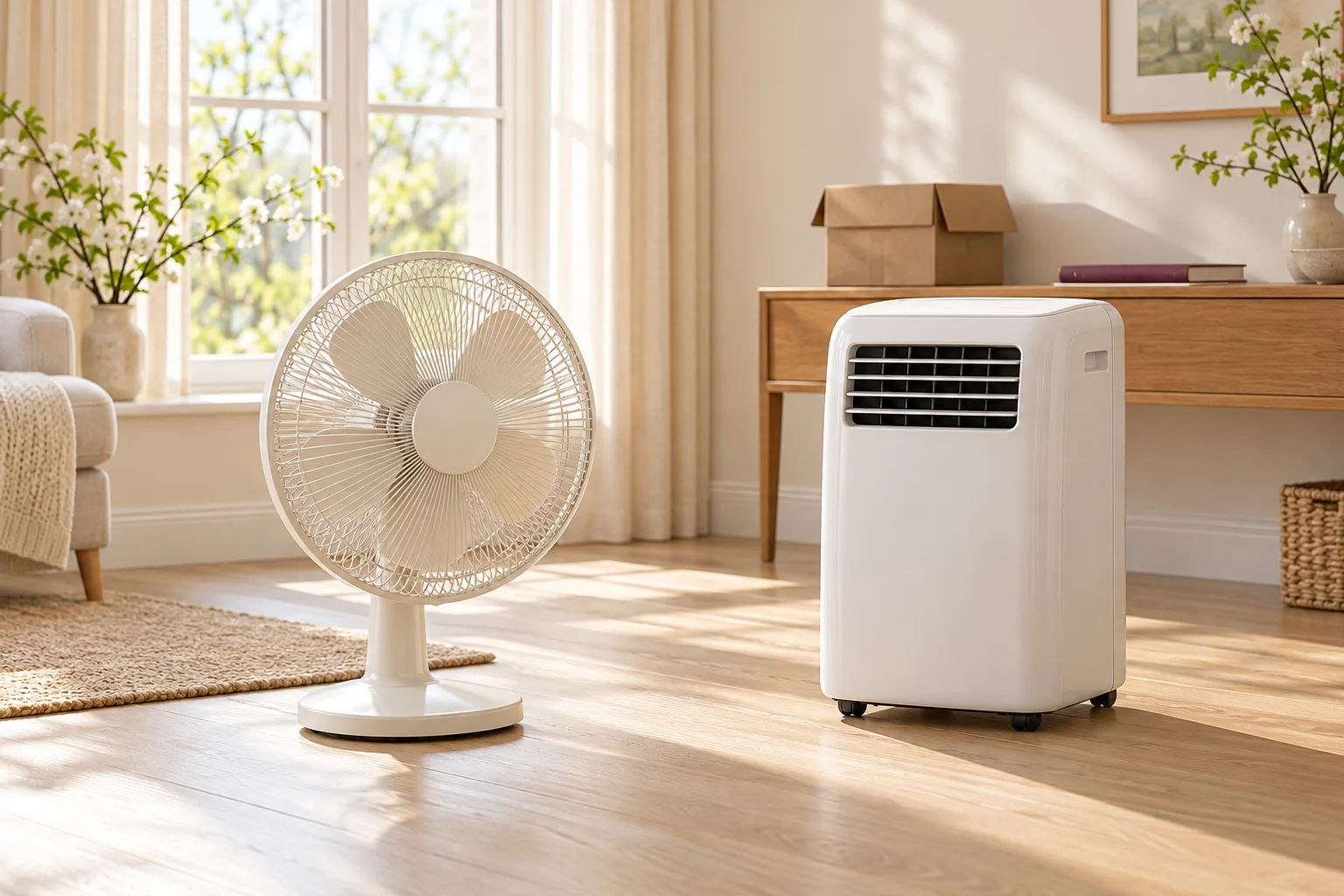
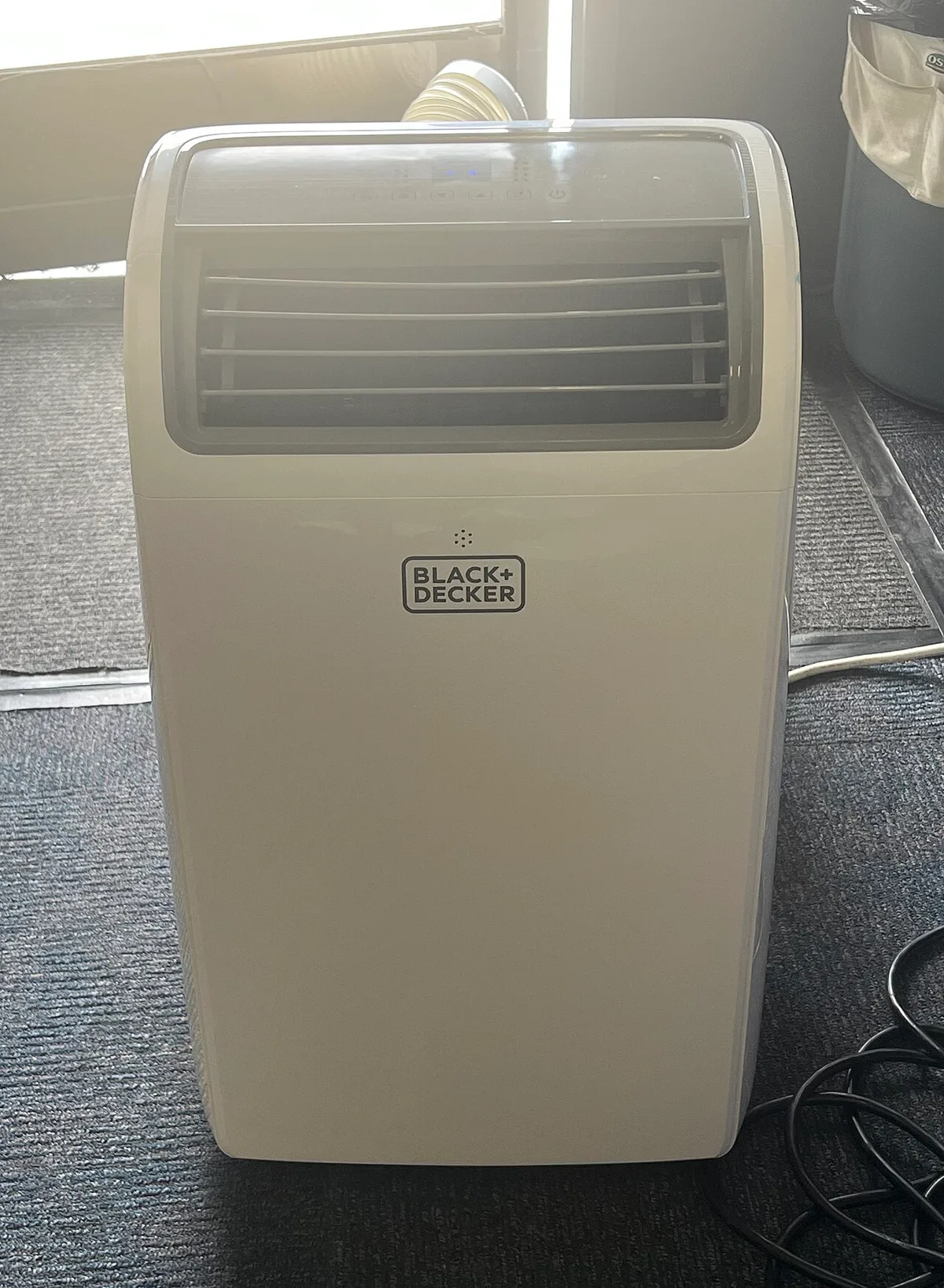
A portable-cooling arrangement can involve a body, an exhaust duct and other model-specific equipment. The historical photographs make the body and large duct visible, while the front-outlet view shows how much of the rest of the system a single angle can omit. Keep the parts list with the model rather than relying on memory when the next season arrives.
Label stored accessories so they are not confused with similar parts from another appliance. Keep the manual and any confirmed replacement identifiers with the record. Do not assume that an apparently interchangeable hose or connector is compatible. A tidy storage area is useful only if it preserves the information needed for the correct equipment.
Separate storage space from operating space
The fictional 50cm by 40cm box outline occupies 0.2m², but that does not describe the space required when an appliance operates. A storage box and a working installation answer different questions. Keep those measurements in separate rows so the smaller storage outline is not accidentally reused as an operating-clearance plan.
Likewise, a bag or box used after the manufacturer's storage preparation is not permission to cover an appliance while it runs. Follow the exact instructions for both states. If the storage conditions are unclear, ask the manufacturer before putting the unit away rather than copying a lifestyle photograph.
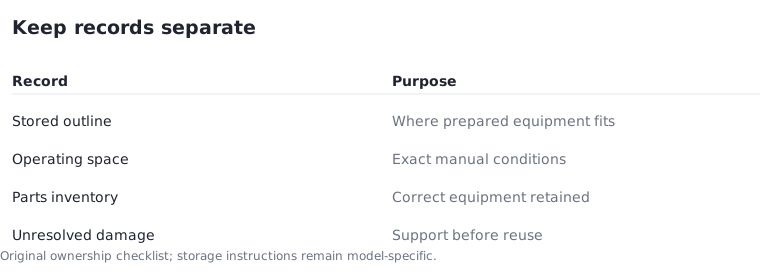
Make the next season easier to start
Record the model, where the manual is kept, which parts are stored together and any unresolved issue. If a component is damaged or missing, note that fact now instead of discovering it when you next want to use the appliance. Keep purchase and support records accessible without moving a heavy unit unnecessarily.
Before returning it to service, review the current instructions and any relevant safety notices rather than assuming storage has preserved every condition. We have not assessed your cupboard or tested the photographed appliances. The useful deliverable is a complete, model-specific storage record with realistic measurements and clear limits.
Dimplex: find the exact model manual ?